
Table of Contents ×
- 1 What is Video Content Optimization & Why Is It Important for Product Videos?
- 2 How to Optimize Product Videos Quickly and Properly?
- 2.1 Step #1. Use Clear, Keyword-Focused Video Titles
- 2.2 Step #2. Write Descriptions That Add Context
- 2.3 Step #3. Add Relevant Tags and Metadata
- 2.4 Step #4. Use Strong, Scroll-Stopping Thumbnails
- 2.5 Step #5. Hook Viewers in the First Few Seconds
- 2.6 Step #6. Add Video Transcripts or Captions
- 2.7 Step #7. Embed Videos on Relevant Pages
- 2.8 Step #8. Use Storytelling Instead of Just Listing Features
- 3 Ready to Optimize Your Product Videos?
- 4 Mini FAQs About Video Content Optimization
Most brands create product videos and stop at uploading them. I’d say that’s only half the job.
If you want your videos to perform in search and reach the right audience, video content optimization is something you can’t ignore.
In many of our projects, our team treats optimization as part of the process.
The goal is to make sure both viewers and search engines clearly understand what the video is about.
Before we go further, are product videos still worth it?
Absolutely yes!
People remember far more from video than from text. Viewers retain about 95% of a message from video, compared to only around 10% from reading.
That means video can make your message almost 9.5 times more memorable.
Not stopping there, I have listed more reasons why video content optimization is essential for your product videos.
Also, scroll until the end to know the seven ways to do it quickly and properly. Let’s go!
What is Video Content Optimization & Why Is It Important for Product Videos?
Video content optimization is the process of making your videos easier to find, understand, and engage with search engines and viewers. For product videos, this usually means optimizing the title, description, metadata, and overall structure so the video has a better chance of appearing in search results.
Optimized videos don’t just help with rankings.
Based on many cases I’ve observed, they also make the content feel clearer, more trustworthy, and worth clicking, which naturally encourages more people to watch.
That’s why video content optimization plays such an important role in the overall performance of your product videos.
1. 92.3% of Users Watch Video Content Weekly
People are watching videos like crazy. In fact, video content makes up about 82% of all internet traffic, and 92.3% of internet users watch videos weekly.
You can see this clearly on platforms like YouTube, where billions of videos are watched daily.
At the same time, short-form platforms like TikTok and Instagram Reels have made video consumption even more constant throughout the day.
With millions of videos being uploaded every minute, do you think standing out is easy? I bet not.
Even a well-produced product video can get buried if it isn’t optimized.
Search engines and platform algorithms can’t actually watch your video. They rely on titles, descriptions, tags, and metadata to understand it.
That’s why video content optimization makes even more sense. It helps your video get discovered instead of getting lost in the crowd.
2. 96% of Marketers Say Video Boosts Brand Awareness
Optimizing your video doesn’t just improve the content itself, but also expands your brand’s reach at the same time.
Platforms like TikTok and YouTube have powerful search engines. When your video is properly optimized, it has a better chance of appearing not only on the platform but also in search results on Google.
If you’ve ever searched for something online, you’ve probably noticed that search pages often include video thumbnails alongside regular articles and links.
That’s because search engines know many users prefer watching a quick explanation instead of reading a long article.
From what I’ve seen across video projects, a well-optimized video can secure more visible placements in these results.
And when that happens, your product video introduces your brand to a much wider audience.
Over time, that visibility can also help position your brand as a trusted voice in your niche.
3. 52% of Shoppers Say Product Videos Boost Buying Confidence
Do not consider video content as a ‘tool’ you must have because everyone else has it.
Video content is an investment, and optimizing your video can result in a bigger return on that investment.
Applying video SEO means that you are one step closer to getting the most out of your investment.
A study says that 52% of consumers think that watching product videos increases their confidence in online purchase decisions.
Essentially, you provide a handful of information that they can use to judge for themselves whether or not they should trust your brand.
If you present this information to as many people as possible, you will get the most out of the money you spent creating the video itself.
4. Be The Key Player For A Niche
Here’s the thing about people on the Internet: the more they see something being shared around and talked about, the more eager they are to find out more.
It’s called fear of missing out (FOMO).
That’s why most online marketers subscribe to Google Alerts. If you don’t already know, Google Alerts (duh) sends you daily/weekly/monthly updates about notable new content for certain keywords.
I, for one, subscribe to alerts for the term ‘explainer video’.
My point is: optimizing your video with the right tags, meta description, and title will get you a premium ticket to Google alert entries.
Now, there are two possible outcomes to this:
- You’ll notify your competitors about what you’re making, allowing them to one-up your content.
- You’ll open a mutualism window.
The first outcome is rather negative, if not neutral, for your brand. In this case, think of your competitor as that one friend who keeps saying he’s done something a little more awesome than what you just told him.
You can ignore them until you do something that is far more awesome than this one.
The second outcome is what you’re shooting for by optimizing your video. People who subscribe to an alert for an ‘explainer video’ are not always explainer video creators.
Some of them come from a niche like video marketing, online marketing, or voice acting. This is the whole point of appearing in a Google alert.
When they see your video in their inbox, watch it and think, “Oh, hey, this is good content, I’ll share it with my Twitter followers.”
It will start a chain reaction that will not end, at least until the content is no longer relevant. And that’s where SEO-ing your video really pays off.
How to Optimize Product Videos Quickly and Properly?
Step #1. Use Clear, Keyword-Focused Video Titles
Your title is one of the first things both viewers and platforms look at to understand your video.
I’ve noticed that simple, descriptive titles almost always perform better than clever ones.
If the title is too vague, the platform may struggle to understand what your video is about.
This applies across platforms like YouTube, TikTok, and Instagram Reels.
When we optimize product videos, we usually keep titles clear, specific, and keyword-focused.
For example, instead of something generic like “Amazing Product Demo”, we’d use something more direct like “How [Product Name] Solves [Problem]”.
Clear titles make it easier for both viewers and algorithms to immediately understand the value of the video.
Step #2. Write Descriptions That Add Context
Descriptions are one of the most overlooked parts of video content optimization.
But guess what? They can make a big difference.
Platforms and search engines like Google rely on the description to understand what your video is really about.
Without that context, your video has fewer signals to rank or appear in recommendations.
Usually, I keep the description structured and straight to the point. Usually, it includes:
- A short summary of the video
- Important keywords used naturally
- A link to the product page or website
Step #3. Add Relevant Tags and Metadata
Tags and metadata are small details, but they help platforms categorize your video correctly.
These signals can influence whether your video appears in search results or recommended feeds.
However, I’d choose not to overdo it. Three tags would do the job! A simple approach I often use is to include:
- The main product keyword
- Keyword variations people might search for
- Related problems or use cases the product solves
Step #4. Use Strong, Scroll-Stopping Thumbnails
I usually tell clients to think of the thumbnail as the cover of their videos. If it’s clear and compelling, people are much more likely to stop and watch.
The video thumbnail is often the difference between someone clicking the video or scrolling past it.
Across platforms, thumbnails tend to perform best when they:
- Clearly show the product
- Use minimal text
- Highlight a key benefit or visual result
Step #5. Hook Viewers in the First Few Seconds
The first few seconds matter more than most people think.
If viewers don’t immediately see why the video is worth watching, they’ll scroll away.
When that happens, platforms may start showing your video less often.
That’s why we usually design the opening to show the value right away.
Sometimes it’s a quick product demo, sometimes it’s the problem the product solves.
The longer people stay, the better your video tends to perform.
Step #6. Add Video Transcripts or Captions
Another tactic I often recommend is adding captions or transcripts.
Search engines can’t actually watch your video, but they can read text.
When you include captions, you give platforms more context to understand your content.
This also improves accessibility. A lot of people watch videos on mute, especially when browsing feeds on platforms like TikTok or Instagram Reels.
In several projects we’ve handled, adding captions not only improved accessibility but also helped videos become more searchable.
Step #7. Embed Videos on Relevant Pages
If you’re creating product videos for your website, don’t just upload them and leave them on a video platform.
I always recommend embedding them directly on relevant pages such as product pages, landing pages, or blog articles.
Why is this important? Embedding videos often helps increase engagement and time spent on the page.
Visitors stay longer because they’re watching the video instead of just skimming text.
And when paired with proper video content optimization, this can also support your broader SEO strategy.
Step #8. Use Storytelling Instead of Just Listing Features
One mistake I see quite often is product videos that only list features.
The videos that perform best usually follow a simple story structure: a problem, a solution, and the result.
Instead of saying what the product does, show how it helps someone.
For example, start with the challenge your customer faces, introduce the product as the solution, and then show the outcome.
This approach makes the video easier to follow and far more memorable.
Here are four rules for storytelling that will help your video optimization, with a few examples to illustrate them.
Be Friendly, Don’t Be Braggy
Engaging video content is not about you. Your customers don’t care that much about your company. Continuously bragging about how your product is superior to a competitor’s will only be a turn-off for your audience.
An effectively engaging video talks about your audience base’s goals, problems, and shared interests.
Building a strong relationship with your audience base starts by stepping into their circle of trust.
You can do this with valuable content, such as providing solutions to common problems, answering questions, and sharing information about the industry’s ups and downs.
Always Include Context
Explaining context is the first thing you should include in a storytelling video. Borrow the basic principles of journalism (what, where, who, when, why, and how) to help your audience better understand your story’s content and context.
Every element in your storytelling video should serve a specific purpose that will gradually make the video better as a whole.
By now, you should have seen Dropbox’s very first explainer video:

The video above combines a story and a call to action beautifully by making the story a double agent: as context and as an introduction to the concept of their product.
DropBox’s video uses people’s tendency to forget where they put small things, like keys and wallets, as the context for introducing their service. You should know that when they first launched, cloud storage hadn’t been introduced widely to the public yet.
This context helped convey Dropbox’s new concept to the public since it used a familiar situation as an analogy.
Create Your Signature
For your video storytelling to work as a brand-building tool, you need to make sure that everyone knows it is your brand, not any other brand.
You can achieve this by including a signature in a video that lets people know that it is your brand that made that video.
Creating an identity is essential for brands, which is why there’s something called brand-building. Yes, brand-building is known as a way to increase consumer awareness of a brand.
However, it’s also a way to give a brand identity and worth.
I recommend that businesses, especially small ones, have a mascot.
Mascots are the easiest way to represent your brand, other than using logos, which are far more likely to be forgotten.
Good mascots personify a brand, enabling a business’s target audience to better identify, remember,r and understand a company and its services.
As ageless brand representatives, mascots serve as brand amplifiers that help a target audience develop a closer relationship with a business.
But mascots aren’t the only way to make your own signature.
Visual aspects such as character designs, color palettes, and strokes are also common practices in claiming a signature style. However, if you aren’t an artist yourself, this is likely to be the least of your concerns.
Bend the Formal Look
When it comes to video marketing, most corporations tend to avoid casual looks. They love formalities so much that they forget not everyone is an office worker with a suit and a briefcase.
Granted, stepping outside the corporate parameters is not as simple as it sounds. Some organizational rules can’t be broken.
However, if you are that kind of brand, you can easily leverage your social media channels or blog comment sections to build a more personalized and colorful communication medium.
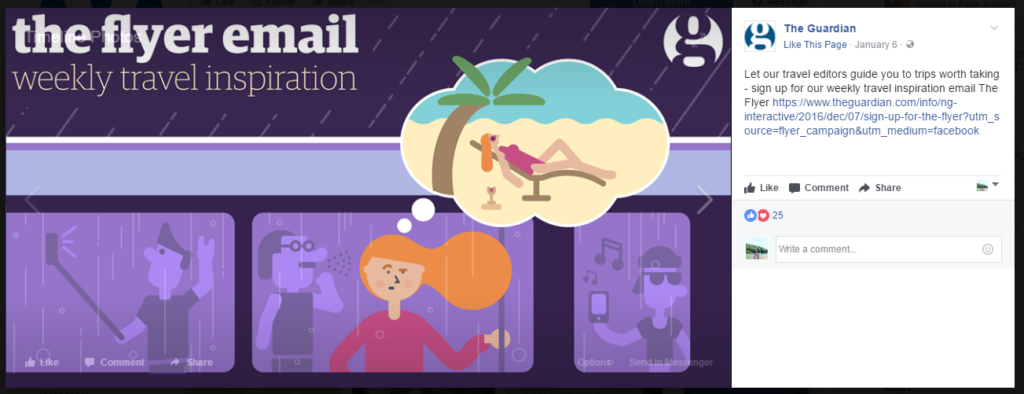
If The Guardian, notably among the biggest and most well-known corporations in the world, can post this colorful, casual image to their Facebook timeline, who says your company can’t?
Ready to Optimize Your Product Videos?
The guidelines for optimizing videos are fairly simple: you need to make it friendly for search engine crawlers to index and engaging for the viewer to watch.
By following these guidelines, your video marketing effort should be one step closer to achieving the goal. What good will your amazing video content do if no one watches it?
These are the frames that your content needs to be seen in, and the principles that will make your audience like you. Not because you offer sales or because you are afraid to lose them, but because you are being personal with them.
Mini FAQs About Video Content Optimization
1. What is video content optimization?
It’s the process of improving a video so it’s easier for both viewers and search engines to find and understand. It optimizes elements like the title, description, keywords, captions, and thumbnail.
2. Why is video content optimization important?
Because platforms rely on signals like metadata and engagement to understand what a video is about and who should see it. Without optimization, even a well-produced video can struggle to get views.
3. What are the most important elements to optimize in a video?
Some of the key elements include the video title, description, keywords, tags, thumbnail, and captions. They help platforms categorize your video and show it to the right audience.
4. Does video content optimization help SEO?
Absolutely. Optimized videos can appear in search results on platforms like YouTube and Google. This can increase visibility and bring more traffic to your website or product pages.
5. How long does it take to see results from video optimization?
It depends on the platform, competition, and keyword difficulty. However, properly optimized videos usually have a better chance of gaining visibility over time compared to those without optimization.
At Breadnbeyond, we offer a wide range of animated explainer video packages that are tailored to leverage your next campaign. Click on the banner below!