
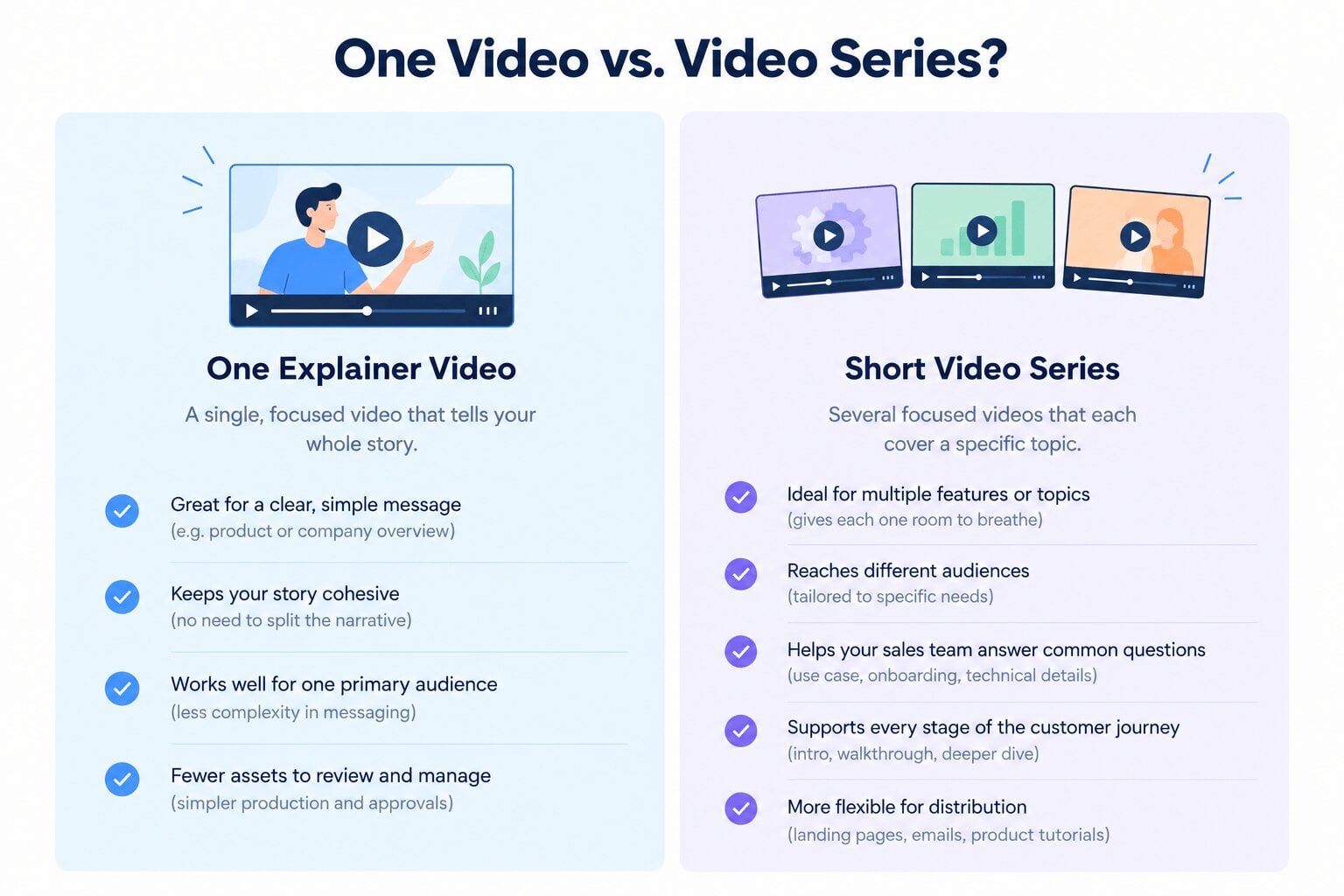
Choose one explainer video when you need to communicate a clear, overarching message. A series of shorter videos works better when you need to explain multiple features, address different audiences, or cover complex topics in more detail.
More often than not, a company can pack its entire product, every feature, and all its selling points into one video. Sometimes, one video is enough. Other times, splitting the story makes far more sense.
So I thought it would be useful to share how I’d approach this decision, including the trade-offs that are easy to overlook.
One Explainer Video vs Short Video Series: Which One Should You Create?
I usually start with one question: what do you need the video to accomplish? The answer matters more than the number of videos you produce. A single overview video can work well for a broad message, while a series gives you room to address specific topics without cramming everything into one video script.
Neither approach is automatically cheaper or more effective. It depends on your product, audience, and how you plan to use the videos.
When Do You Need Just One Explainer Video?
A single explainer video is often the better choice when your product has one main value proposition and your audience needs a quick introduction.
For example, if you’re launching a new service, you might need a 60 to 90-second video that explains the problem, introduces your solution, and gives viewers a reason to learn more. That’s a clear job for one video.
I tend to recommend this approach when:
- You’re introducing a product or company. A concise overview gives people the context they need without asking them to watch several videos.
- Your message follows one clear story. If the problem, solution, and benefits naturally fit together, splitting them up could make the explanation feel disconnected.
- You have one primary audience. You don’t need separate explanations for people with very different needs.
- You need a video for a specific landing page or campaign. One focused video can support a single call to action, such as booking a demo or requesting a quote.
There’s another practical consideration: approvals. One video generally means fewer assets for your team to review, publish, and maintain.
That doesn’t mean you should squeeze every product detail into it. A good explainer video gives people enough information to understand the value. It doesn’t need to answer every possible question.
A good example is our work with Yazoo Mills, a manufacturer of paper tubes and cores. We created a brand video combining live-action footage with 3D animation to showcase the company, its manufacturing capabilities, and its products in one cohesive story.
This approach worked because the video had one central purpose: introduce the brand and give viewers a clearer picture of what Yazoo Mills does. Rather than splitting the story into several videos, we brought the key information together in one piece.

When Should You Make a Series of Shorter Videos?
A series becomes more useful when one video would have to cover several distinct topics. This happens often with complex software, products with multiple use cases, or services aimed at different customer groups.
Let’s say you sell project management software. An overview video can introduce the platform, but it may struggle to explain task automation, reporting, team collaboration, and integrations in the same short runtime.
Separate videos give each topic room to breathe.
I’d consider a series when:
- Your product has several features worth explaining individually. Each video can focus on one feature, its purpose, and the problem it solves.
- Different audiences care about different benefits. A business owner might want to understand cost savings, while an end user cares more about daily workflows.
- Your sales team keeps answering the same questions. Short videos can explain common use cases, onboarding steps, or technical concepts before a sales call.
- You need content for different stages of the customer journey. An introduction, a product walkthrough, and a deeper feature explanation serve different purposes.
- Your product changes frequently. Updating one focused video may be simpler than revising a long animation that contains several features and workflows.
Shorter videos also give your team more options for distribution. You can embed a feature-specific video in a relevant landing page, share it in a sales email, or use it in a product tutorial.
There’s a learning principle behind this approach, too. The segmenting principle in multimedia learning suggests that people can process complex information more effectively when it’s broken into manageable sections rather than presented all at once. For a product with several features or a topic that needs careful explanation, giving each subject its own video can make the information easier to follow.
Of course, this doesn’t mean every topic needs its own video. The goal is to break down information when doing so helps viewers understand it. Read about the segmenting principle.
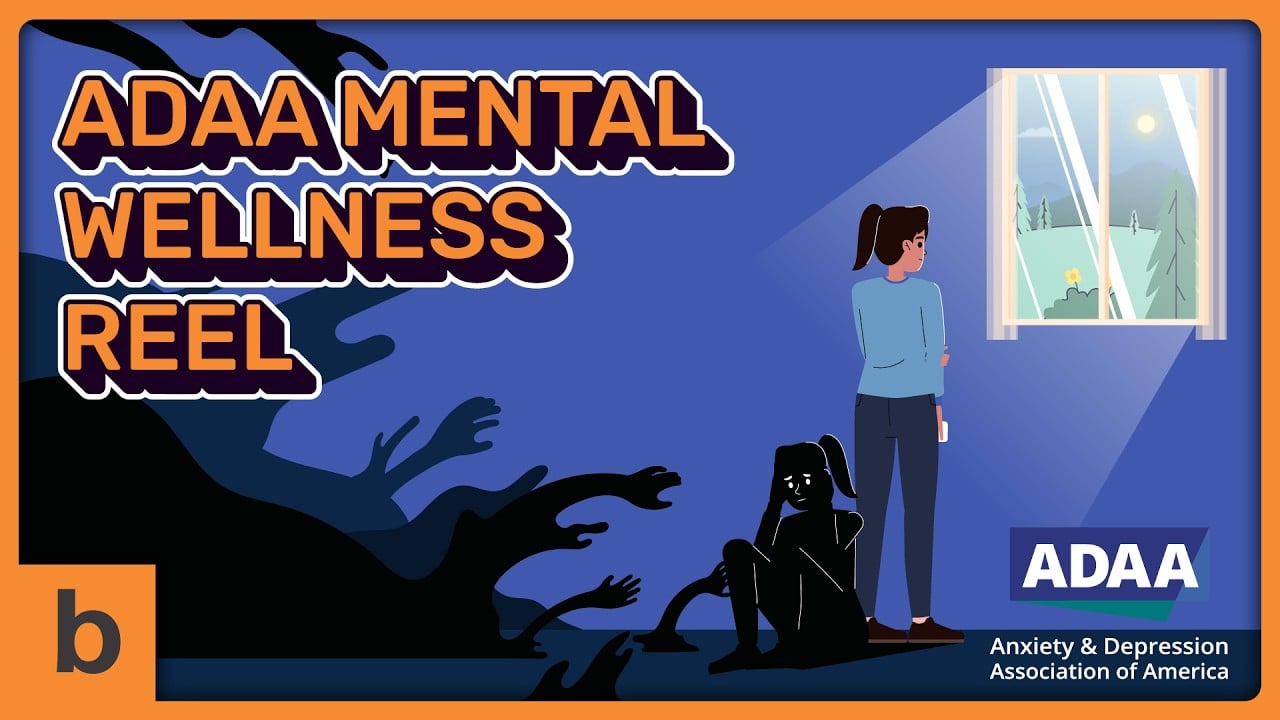
One example is our work with ADAA, where we created a series of animated videos explaining different mental health conditions. Topics like these need careful explanations, and squeezing several conditions into one video could leave viewers with only a surface-level understanding.
By giving each condition its own video, we could focus on its specific symptoms, characteristics, and key information without overwhelming viewers. It also made the series easier to navigate. Someone looking for information about a particular condition could watch the relevant video without sitting through an explanation of several others.
Here’s the whole reel of the series:
How Does the Number of Videos Affect Production Costs?
This is where the decision gets interesting. More videos don’t automatically mean a higher cost per second, and one longer video isn’t always the cheaper option.
When I estimate an animation project at Breadnbeyond, I look at the work involved, not just the final runtime.
A single video may require one script, one visual direction, and a set of scenes that explain the whole product. A series may require more scripts and individual edits, but the videos can share character designs, backgrounds, illustrations, and other assets.
That reuse can help reduce duplicated work. There’s a catch, though: every additional video still needs a reason to exist.
Consider these differences:
- Scripting: One video needs a cohesive narrative. A series needs separate scripts that work independently while keeping the overall message consistent.
- Visual development: Shared styles and assets can carry across a series. However, topics that require very different visual explanations may need additional design work.
- Animation: Reusing existing scenes can save time, but entirely new features or workflows still need to be animated.
- Review and revisions: Several videos can mean more rounds of feedback, particularly when multiple stakeholders are involved.
For a simple comparison, imagine a company with four product features. It could commission one video covering all four or four individual videos, each focused on one feature.
The first option may involve more scene changes and a denser script. The second may involve more separate introductions and endings, but allow for asset reuse and more focused messaging.
There’s no reliable way to declare a winner based on runtime alone. Ask your production studio to quote both approaches using the same brief and intended deliverables. You’ll get a much more useful comparison.

Can You Start With One Video and Expand Into a Series Later?
Yes, and this can be a sensible way to manage the initial budget. You don’t have to commit to a full video series before you know which topics deserve their own animations.
Start with the core message. Once that video is complete, you can identify the features, questions, or use cases that need more explanation.
I’d recommend thinking about future reuse during pre-production, even if you’re only producing one video at first. That could mean keeping illustrations organized, designing reusable characters, or planning scenes that can be adapted for later videos.
A little planning helps. But it doesn’t mean every future video will be inexpensive to produce. If the product changes significantly or the new topic needs a different visual approach, additional work is inevitable.
If you expect to commission more videos, tell your studio upfront. It gives the team a chance to plan the visual system and video production workflow accordingly.
How Do You Decide Which Approach Is Right for Your Business?
My advice is to start with the message, not the format. Before requesting a quote, write down what viewers should understand or do after watching each video.
If you can describe that goal in one clear sentence, a single explainer video may be enough. If you find yourself listing several unrelated goals, a series could be a better fit.
Think about the video distribution, too. A company homepage may need one broad introduction, while a sales team might benefit from several short videos tailored to specific objections or product features.
Video budget matters, of course. But you should also consider how long the videos will remain useful, how often you’ll need to update them, and whether your team will actually use each one.
When in doubt, start with the most important message. Build from there when you have a clear reason to.
Wrapping Up: One Video or Ten? Let’s Find the Right Fit for Your Business
Choosing between one explainer video is pretty much all about figuring out what your audience needs to understand and how best to communicate it.
At Breadnbeyond, we help businesses turn complex ideas into clear, engaging animated videos. Whether you need one video to introduce your product or a series to explain individual features, our team can help you shape the concept, plan the production, and find an approach that fits your goals and budget.
Not sure which format makes more sense for your project? Talk to our team and let’s work out the right approach for your business.
Frequently Asked Questions About Explainer Video Series
How long should an animated explainer video be?
Most animated explainer videos run between 60 and 120 seconds, although the ideal length depends on the subject and how much detail viewers need. Focus on delivering the message clearly rather than hitting a specific runtime.
Should explainer videos have the same visual style?
If your videos belong to the same brand or campaign, a consistent visual style helps viewers recognize them. You can still vary the pacing, characters, and layouts to suit each video’s subject.
Can explainer videos be used for employee training?
Yes. Animated videos can explain internal processes, software procedures, safety guidelines, and company policies. They also give employees a consistent reference they can revisit whenever needed. Read more about explainer videos for employee training.
What should you prepare before commissioning an explainer video?
Start with a clear objective, your target audience, and the main message you want to communicate. Existing product materials, brand guidelines, and examples of videos you like can also help your production team understand your expectations.
How do you know if your explainer videos are working?
Measure performance against the goal of each video. For example, track demo requests for a sales video, completion rates for educational content, or support ticket volume for instructional videos. Views alone rarely tell the whole story.