Clients often compare video packages by price before they compare what’s actually inside them. Well, as they should. But on paper, many packages sound almost identical. Behind the scenes, though, they can be worlds apart.
That’s why I always walk clients through every stage of the video production process before we begin. It saves surprises later, and usually leads to a much better video.
This article is my way of doing exactly that. I’ll share what I usually include in a video package, along with the thinking behind each step from my experience as a studio owner.
What Do Most Video Packages Include?
From what I’ve seen over the years, most professional video packages cover the same core production stages, although every video production studio has its own workflow.
I include each of these steps because skipping one usually creates bigger problems later. Here’s what I believe every client should expect before they commit to a project.
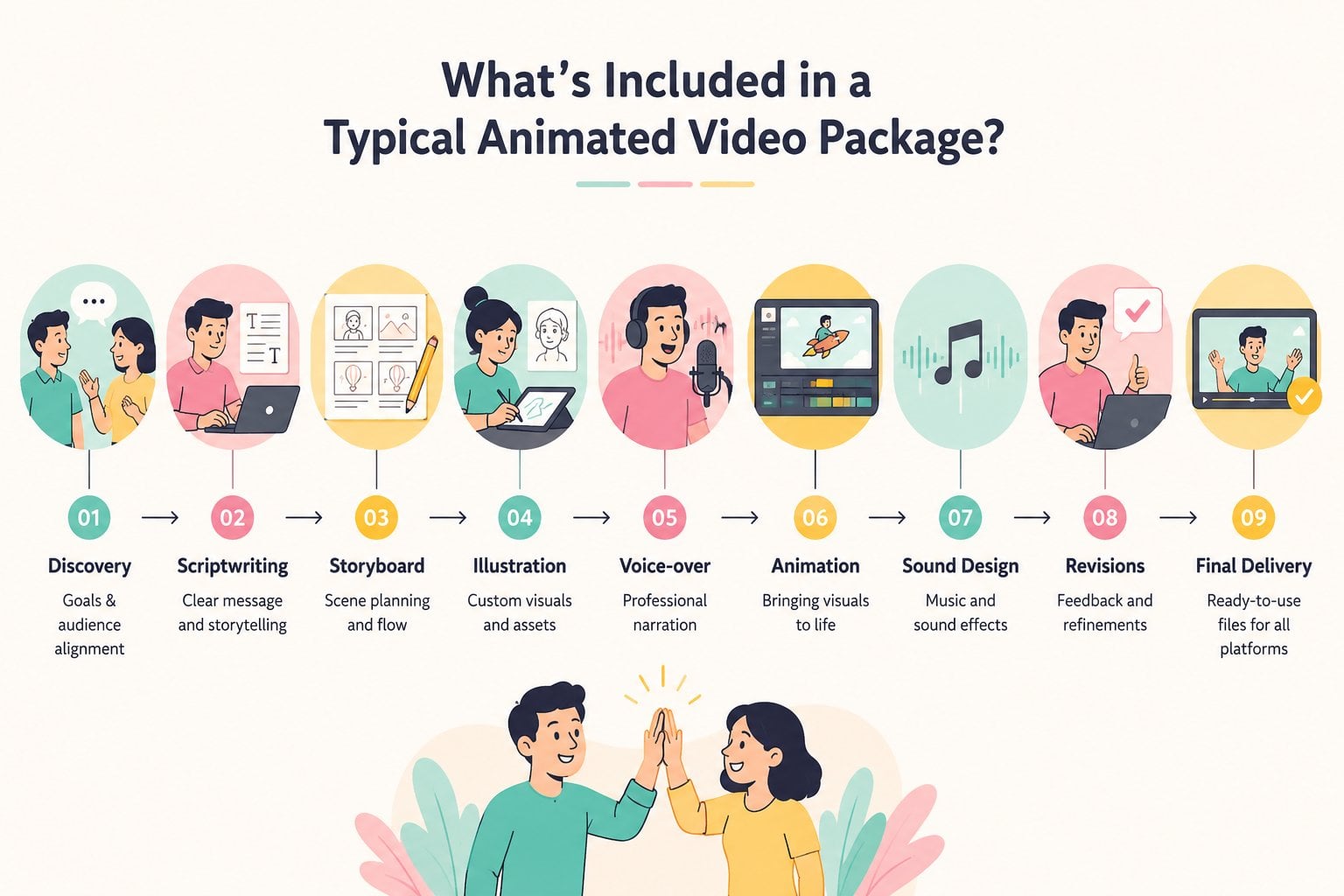
Discovery and Creative Brief
Every project I take on starts with learning about the business behind the video. I want to understand who the audience is, what problem we’re solving, and what one message viewers should remember after watching.
It may seem like a simple conversation, but I’ve found that projects that skip this stage almost always require more revisions later because everyone starts with different assumptions.
Scriptwriting
The script is the foundation of everything that follows. If the messaging isn’t clear here, no amount of great animation can fix it later. I never expect clients to hand me a perfect script. In fact, many come to me with rough notes, product documents, or just an idea, and that’s usually enough to get started.
Storyboard
Once the script is approved, I turn those words into a visual plan. A storyboard shows how each scene will look, what appears on screen, and how the story flows from beginning to end before anyone starts animating.
This gives clients an opportunity to make changes early, when they’re much easier and less expensive to implement.
Illustration and Character Design
This is where the video starts to develop its own personality. Depending on the project, my team creates custom characters, icons, illustrations, or other visual assets that reflect the client’s brand rather than relying on generic graphics. A consistent visual style helps the final video feel polished and memorable.
Professional Voice-Over
I’ve learned that the same script can leave a completely different impression depending on who’s reading it. That’s why I include professional voice-over as part of the process instead of treating it as an afterthought.
The right voice, language, and delivery help the message feel natural and connect with the intended audience.
Animation and Motion Design
This is the stage most people associate with explainer videos, but it’s really where all the previous work comes together. Every transition, movement, and animation is built around the approved script and storyboard to guide viewers through the message. It’s also typically the longest production stage because every scene is created frame by frame.
Music and Sound Design
Sound has a subtle influence on how people experience a video. I usually add background music and sound effects that support the pacing and reinforce important moments without competing with the narration. When done well, viewers notice the overall experience more than the individual audio elements.
Revisions and Final Delivery
I always include revision rounds because creative projects benefit from feedback. Clients often spot small details once they see the video in motion, and it’s much better to refine those before delivery.
Once everything is approved, I export the final video in the formats they’ll need, whether it’s for a website, social media, presentations, or digital advertising.
What Should You Pay Attention to When Comparing Video Packages?
When comparing explainer video packages, the biggest mistake I see is focusing only on the final price. From my experience running an explainer video company, the real differences usually appear in the process behind the package, from how the story is developed to how much support you receive along the way. Before making a decision, I recommend looking closely at these details.
1. What’s Actually Included in the Price?
Many clients compare packages by looking at the number they see on a proposal. I understand why. Budget matters. However, a lower price can sometimes mean important stages are missing, such as script development, custom illustration, or revision rounds.
When reviewing a package, I always recommend checking what’s included before comparing numbers. A package that looks cheaper upfront may require additional costs later if key parts of production are treated as add-ons.
See: 10 Questions to Ask an Explainer Video Studio (2026 Checklist)
2. How Much Strategy Goes Into the Process?
One thing I’ve noticed after years in this industry is that the best explainer videos rarely come from animation alone. They come from understanding the message before creating the visuals.
A good production partner should spend time learning about your product, audience, and goals. Without that foundation, even a beautifully animated video can miss the point.
3. Is the Creative Work Actually Custom?
This is something many clients don’t think about at first. Some videos may look polished, but the visuals are built from the same templates used for many other projects.
Custom illustrations, characters, and storytelling choices help a video feel connected to your brand. In my experience, that personal touch is often what separates a video that feels memorable from one that feels generic.
4. How Does the Revision Process Work?
Revisions are a normal part of creating any creative project. Even with a detailed brief and storyboard, seeing the video come together can reveal small things that need adjustment.
Before choosing a package, I suggest asking how many revision rounds are included and when feedback is collected. A clear video revision process keeps the project moving without creating frustration on either side.
5. Who Will Be Working on Your Video?
Behind every explainer video is a team of people handling different parts of production. Writers, illustrators, animators, and voice artists all influence the final result.
I think clients should understand who is involved in their project and how the collaboration works. Communication becomes much easier when everyone knows who is responsible for each stage.
6. What Happens After the Video Is Finished?
The relationship shouldn’t end the moment the final file is delivered. Depending on how you plan to use the video, you may need different formats, small updates, or guidance on how to distribute it.
A good explainer video package should give you clarity beyond production. The goal is to help you actually use the video effectively.
Why Every Explainer Video Package Is Different?
One thing I’ve learned after years of running an explainer video company is that there is no universal package that works for every client. Two companies might both need a 90-second explainer video, but their goals, audiences, and production needs can be completely different.
I don’t think that’s unique to the creative industry. Businesses today increasingly expect solutions that reflect their specific needs rather than generic offerings. Deloitte Digital’s 2024 research found that brands with advanced personalization capabilities were 48% more likely to exceed their revenue goals than those with lower personalization maturity. To me, that’s another reminder that tailoring the experience is actually good business.
A startup explaining a new product may need more time on messaging and storytelling. Meanwhile, an established company creating an internal training video might already have the content figured out and need more focus on visuals and delivery.
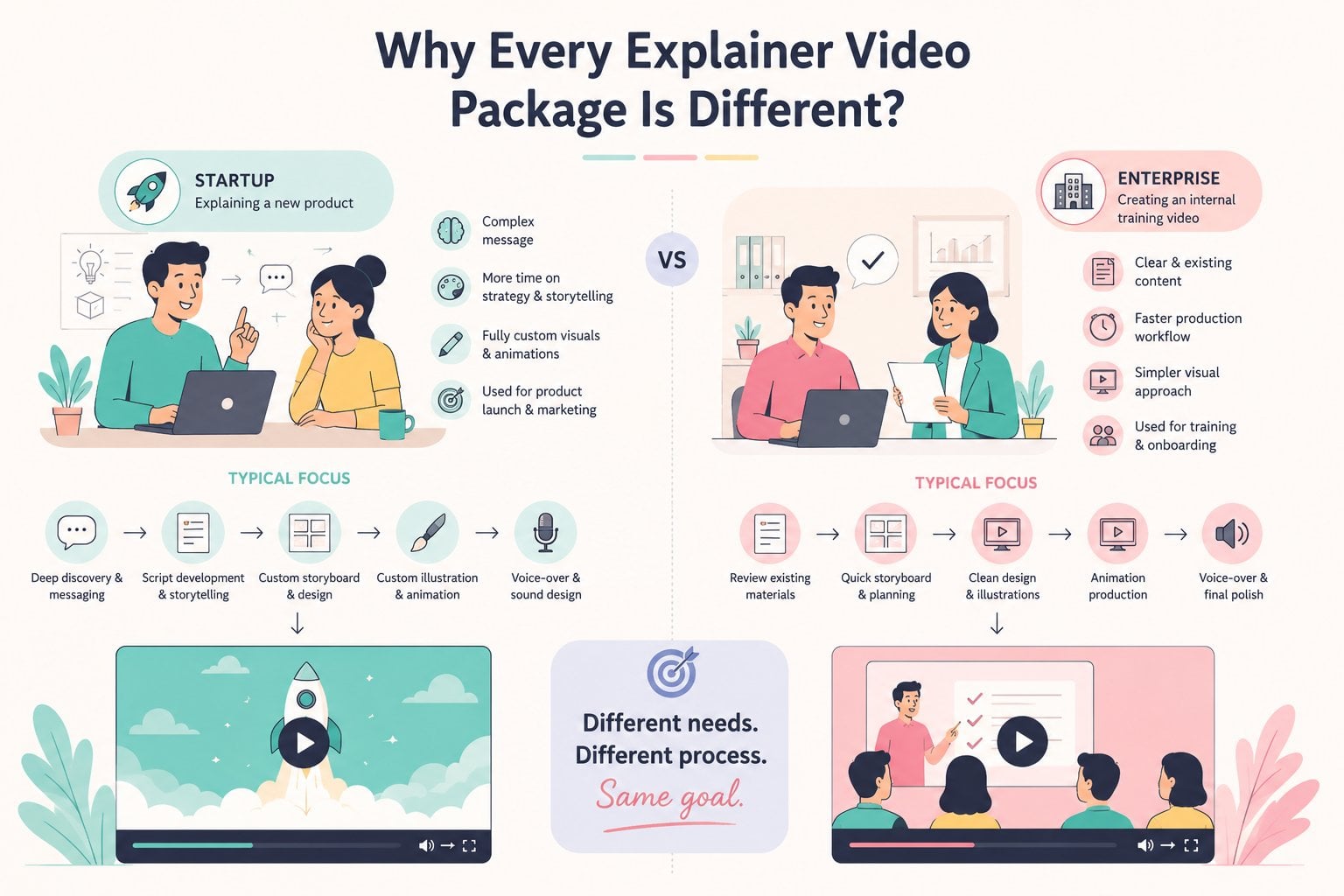 That’s why I don’t think a good explainer video package should be built around a fixed checklist alone. It should adapt to what the video needs to achieve.
From my perspective, the best explainer video package is the one that matches the client’s actual situation. A package shouldn’t force every project into the same process. It should provide the right amount of strategy, creativity, and production support to help the video achieve its purpose.
Some factors that can change what goes into a package include:
- The complexity of the message: A simple product overview usually requires less strategic development than explaining a technical solution, SaaS platform, or complicated process.
- The level of customization needed: Some projects need fully custom characters, illustrations, and animations to match the brand. Others may work well with a simpler visual approach.
- The amount of support during production: Some clients come with a clear idea and existing materials. Others need more guidance with storytelling, script development, and creative direction.
- Where the video will be used: A video for a homepage, sales presentation, onboarding process, or paid advertising campaign may require different creative decisions.
A Clear Process Starts With a Clear Package
After working with clients from different industries over the years, I’ve realized that transparency is one of the most important parts of any creative partnership. A great video isn’t just about the final animation. It also comes from knowing what you’re getting, what the process looks like, and what you can expect from the start.
At Breadnbeyond, we built our explainer video packages around that idea. Our pricing is straightforward, with no hidden fees added halfway through production. The scope, deliverables, and costs are clearly discussed upfront, so clients can make decisions with confidence.
I believe a good partnership starts before the first frame is created. It starts with trust, clear communication, and a team that respects your investment. That’s the approach we’ve followed for years, and it’s what continues to help us create explainer videos that businesses are proud to share.
Mini FAQs About Explainer Video Packages?
How long is a typical explainer video package timeline?
The timeline depends on the project’s scope, but most explainer video projects take several weeks from initial discussion to final delivery. Factors like stakeholder availability, feedback speed, and project complexity can affect how quickly a video moves forward.
Can I use my own script for an explainer video project?
Yes, some clients come with an existing script, while others start with only a rough idea. A production team can usually work with either option and help refine the content so it fits the video format better.
Do explainer video packages include video ownership rights?
This depends on the agreement with the production company. Before starting a project, it’s worth confirming what rights you receive after completion and how you can use the final video across different channels.
Can an explainer video be updated in the future?
Yes, many businesses eventually need updates because their products, branding, or messaging change. A good video production partner should be able to discuss options for making adjustments without rebuilding everything from scratch.
What information should I prepare before contacting an explainer video company?
Having a clear goal, target audience, and basic information about your product or service can help the first conversation go smoothly. You don’t need to have every detail figured out, but knowing what you want the video to accomplish is a useful starting point. See the clients’ guide I wrote to help you prepare your video: A Smart Client’s Guide to a Smooth Explainer Video Project.