Table of Contents ×
- 1 What Is the Main Difference Between a B2B and B2C Explainer Video?
- 1.1 Who Is the Audience Watching the Video?
- 1.2 How Does the Buying Process Change the Video Strategy?
- 1.3 What Tone Works Best for B2B vs B2C Explainer Videos?
- 1.4 Why Do B2B Explainer Videos Usually Need More Clarity?
- 1.5 Why Do B2C Explainer Videos Focus More on Emotion and Attention?
- 1.6 What Kind of CTA Works Better for B2B and B2C Videos?
- 2 Which Type of Explainer Video Converts Better for Business Goals?
- 3 The Best Explainer Videos Usually Feel Like They Truly Understand the Audience
- 4 Mini FAQ About B2B vs B2C Explainer Videos
What’s the difference between B2B and B2C explainer videos? B2B explainer videos usually focus on clarity, trust, and helping decision-makers understand complex solutions before they commit. B2C explainer videos move faster, lean more emotional, and fight harder for attention because the audience often decides in seconds.
That shift changes everything behind the scenes. The scripting. The pacing. The visuals. The CTA. Even the platforms where the videos perform best.
In this article, I’m breaking down the real differences between B2B and B2C explainer videos from first-hand experience as an explainer video owner and creative director, including what actually helps these videos convert instead of just collecting views.
What Is the Main Difference Between a B2B and B2C Explainer Video?
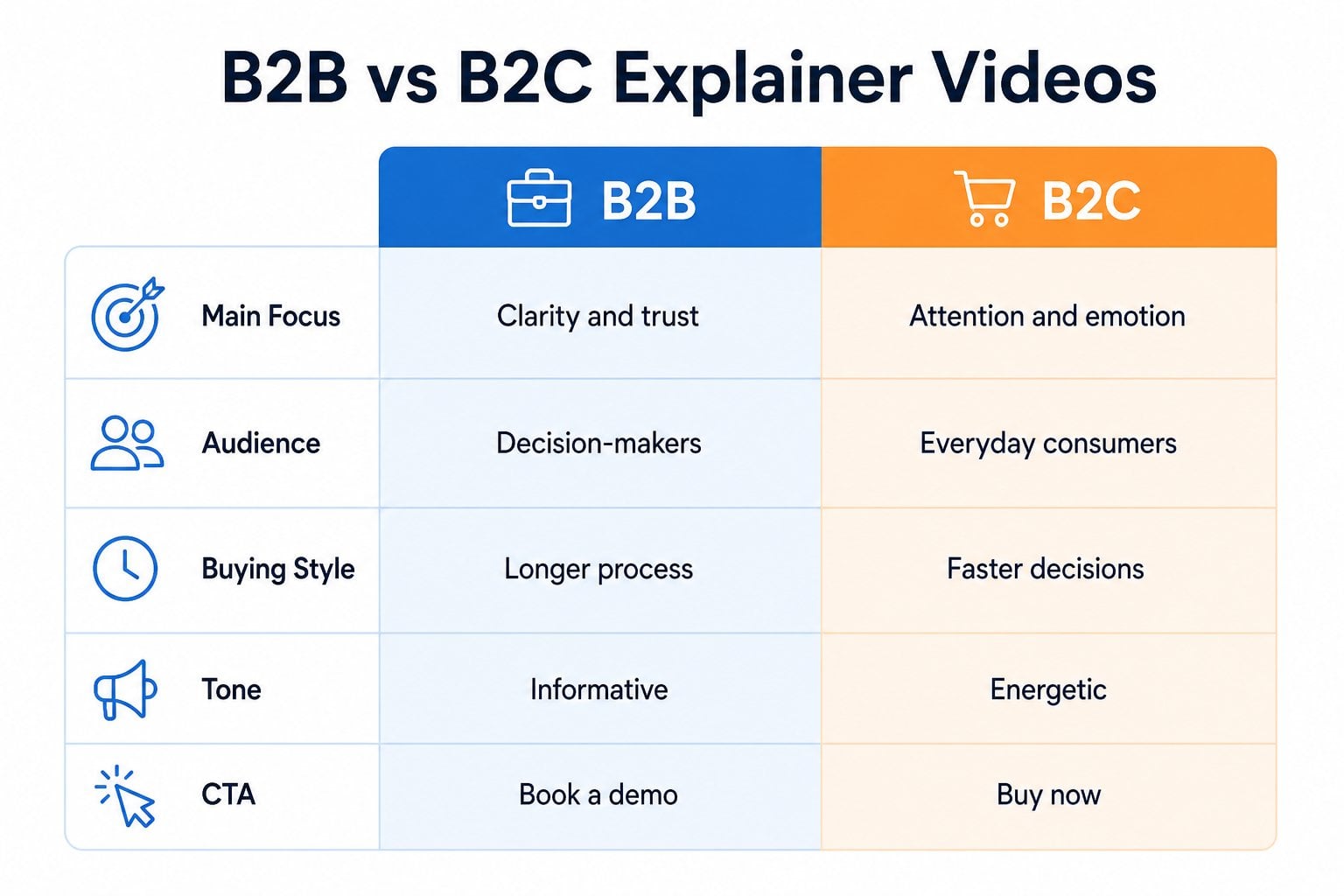
B2B explainer videos are usually built to educate and build trust over a longer buying process, while B2C explainer videos focus more on grabbing attention and triggering faster emotional decisions.
Who Is the Audience Watching the Video?
A B2B explainer video is usually speaking to someone with responsibility attached to the decision. Sometimes it’s a founder. Sometimes it’s a department head trying to convince the rest of the team. In larger companies, the video may pass through several people before anything happens.
That changes how the video needs to communicate.
When we work on B2B projects, clients often spend a surprising amount of time making sure the messaging is accurate because the audience is actively evaluating the business itself, not just the visuals.
The viewer wants confidence. They want clarity. They want to know the company understands the problem deeply. And clearly, businesses are paying attention to that shift. According to Google, 95% of B2B buyers say video influences their decision-making process before a purchase happens.
B2C audiences are different. Most of the time, they are not sitting down to “research.”
They are scrolling, comparing quickly, multitasking, or casually browsing. Attention becomes the first challenge before persuasion even begins.
How Does the Buying Process Change the Video Strategy?
One of the biggest creative mistakes I see is treating B2B and B2C buying behavior the same way.
B2B buyers rarely make instant decisions after watching one video. There are meetings afterward. Internal discussions. Budget approvals. Follow-up calls. The explainer video becomes part of a longer sales process, which is why the messaging usually needs to stay useful even after multiple rewatches.
That’s very different from many B2C campaigns where the goal is immediate reaction. Click the ad. Download the app. Buy the product. Follow the brand. The video often needs to move faster because hesitation usually means losing the viewer completely.
This difference affects pacing more than people realize. B2B videos often earn attention gradually. B2C videos usually have to win it immediately.
What Tone Works Best for B2B vs B2C Explainer Videos?
Tone can completely change how trustworthy a video feels.
For B2B brands, I’ve found that audiences respond better when the tone feels confident and conversational instead of overly sales-heavy.
Trying too hard to sound “fun” can sometimes weaken credibility, especially when the service itself is technical or expensive.
That doesn’t mean B2B videos should feel stiff, though. Some of the best-performing projects we’ve produced still had personality and even some sprinkles of humor. The difference is that the humor supported the message instead of distracting from it.
Here’s one example from our projects that B2B explainer videos don’t have to sound too corporate or overly formal to stay effective.

B2C brands usually have more freedom to experiment emotionally. Some want high energy. Others want humor, nostalgia, excitement, or even chaos depending on the target market. Consumer audiences are often buying based on feeling first, logic second.
One B2C project we made for NutriChew leaned fully into that freedom. We used doodle-style animation, more playful visuals, and a lighter script because the brand needed to feel fun and approachable first, not overly polished or corporate.

Why Do B2B Explainer Videos Usually Need More Clarity?
A confusing B2B explainer video can kill interest surprisingly fast.
Many B2B products are already difficult to explain in plain language. SaaS platforms, enterprise tools, financial services, cybersecurity solutions, logistics systems. If the video adds more complexity instead of removing it, viewers stop paying attention.
This is where structure matters more than flashy animation.
Some of the strongest B2B videos I’ve directed were visually simple but extremely clear in how they explained the problem, workflow, and outcome.
Clients sometimes come in asking for trendier visuals, but what actually improves conversion is usually better communication.
In B2B, clarity often feels more premium than complexity.
Why Do B2C Explainer Videos Focus More on Emotion and Attention?
B2C viewers decide very quickly whether a video deserves their attention.
You can see it in retention graphs almost immediately. Weak opening? Drop-off. Slow pacing? Drop-off. Generic visuals? Drop-off.
That pressure changes the creative approach from the very first second.
Consumer-focused explainer videos often rely heavily on visual momentum, emotional triggers, relatable situations, or strong hooks because the audience is usually surrounded by distractions. They are not arriving with patience already built in.
In many B2C campaigns, getting someone to keep watching is only half the battle.
What Kind of CTA Works Better for B2B and B2C Videos?
The CTA at the end of the video should match the level of commitment the audience is realistically ready for.
For B2B brands, asking for an immediate purchase can feel unnatural unless the product is extremely low-risk.
Most of the time, the better move is pushing viewers toward the next conversation. Book a demo. Schedule a call. Talk to the team. Download the case study.
B2C audiences are often more comfortable acting immediately, especially for lower-cost products or impulse-driven purchases.
The CTA can usually be more direct because the emotional decision has already happened during the video itself.
Which Type of Explainer Video Converts Better for Business Goals?
Neither B2B nor B2C explainer videos are automatically “better” at converting. The real question is whether the strategy matches the business goal and the audience behavior behind it.
I’ve seen visually impressive videos fail because they copied the wrong approach for the wrong market. A B2C-style video packed with fast cuts and trendy humor may struggle in a B2B sales environment where buyers want clarity and confidence.
On the other hand, a slow and overly detailed B2B-style explainer can completely lose consumer audiences within seconds.
The highest-converting explainer videos are usually the ones that understand how the audience thinks before the animation process even starts.
When Does a B2B Explainer Video Perform Best?
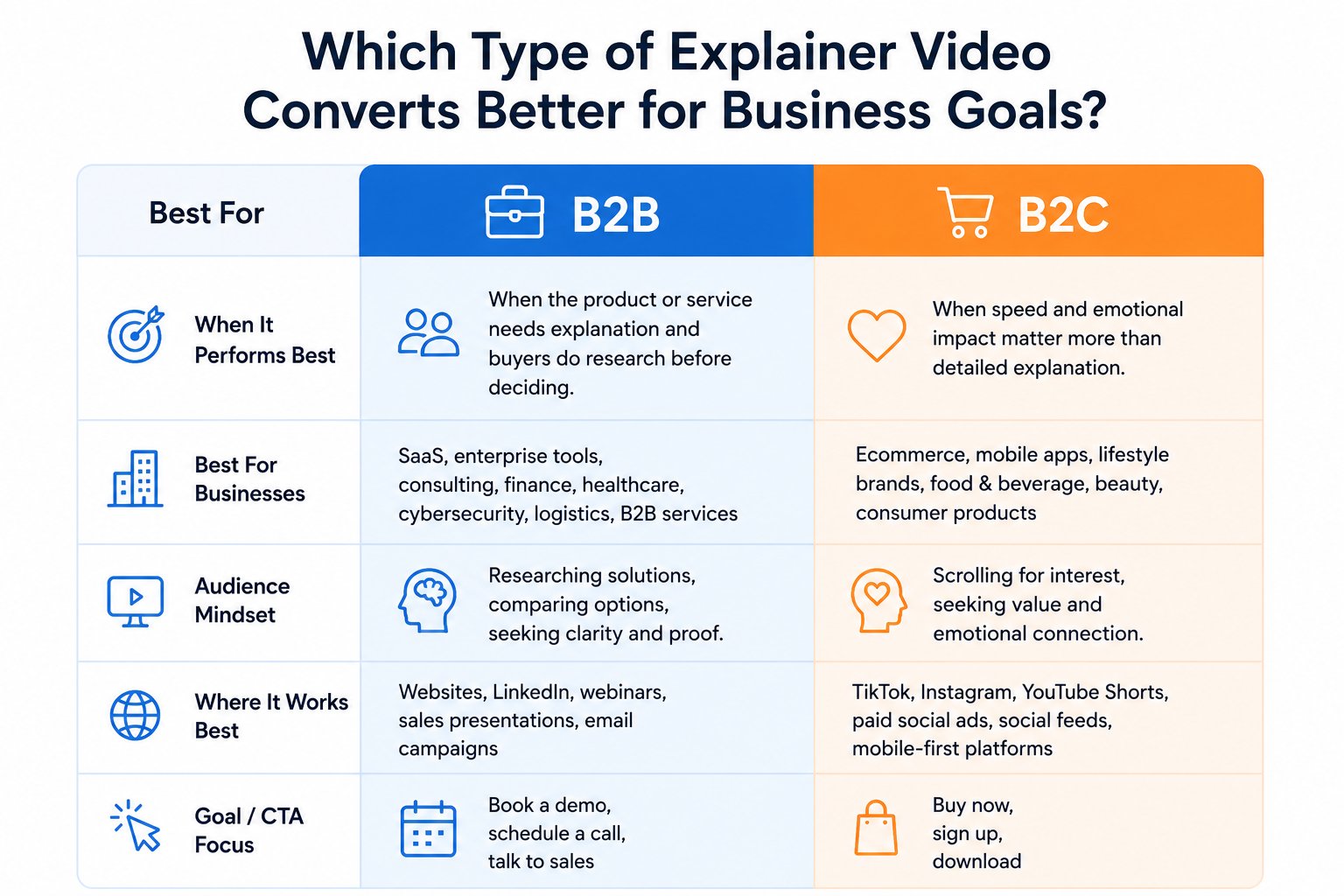
B2B explainer videos usually perform best when the product or service needs explanation before someone feels comfortable buying.
This happens often in industries like SaaS, finance, cybersecurity, healthcare, logistics, or consulting where the audience wants to understand the workflow, business value, or long-term impact before making a decision.
B2B videos tend to work especially well on landing pages, sales presentations, LinkedIn campaigns, and outbound email sequences because viewers are already in research mode. They are actively looking for answers, which means a clear explainer video can shorten the sales process significantly.
The strongest B2B videos usually focus less on “selling hard” and more on making complicated things feel easy to understand.
When Does a B2C Explainer Video Perform Best?
B2C explainer videos usually perform best when speed and emotional reaction matter more than detailed explanation.
Consumer audiences often decide quickly whether something feels interesting, useful, exciting, or relatable.
That’s why B2C videos tend to perform well for product launches, mobile apps, ecommerce campaigns, lifestyle brands, food and beverage products, beauty brands, and social-media-first marketing campaigns.
For most B2C projects, the first few seconds mattered more than the rest of the video combined.
That means if the opening failed to create curiosity immediately, retention dropped fast no matter how polished the animation looked afterward.
For B2C brands, momentum matters. The video needs to feel easy to watch before it can persuade anyone to act.
Which Platforms Work Better for B2B and B2C Explainer Videos?
Platform choice changes how an explainer video should be structured.
B2B explainer videos often perform better in places where viewers already expect to spend time evaluating information. These platforms usually give B2B videos more room to explain ideas properly:
- Company websites
- Sales calls
- Webinars
- Presentations
- Email campaigns
B2C videos behave differently. Platforms like TikTok, Instagram, YouTube Shorts, and paid social ads reward speed, visual hooks, and quick emotional engagement. Audiences there are moving fast, so the video has to earn attention almost instantly.
I’ve also asked marketers and business professionals where explainer videos tend to perform best across different platforms and industries. You can read the expert roundup here: Explainer Video Best Placements.
The Best Explainer Videos Usually Feel Like They Truly Understand the Audience
One of the reasons we enjoy working on both B2B and B2C projects at Breadnbeyond is because the creative challenge is completely different every time.
Some clients need help simplifying technical ideas for investors or enterprise buyers. Others need videos that instantly connect with people emotionally in crowded social feeds.
At Breadnbeyond, we like projects that come with a real communication challenge behind them.
Sometimes the challenge is simplifying a complicated idea without losing credibility. Sometimes it’s helping a brand stand out in an environment where people scroll faster than they think.
Different audiences require different storytelling instincts, and that’s exactly why no two projects ever feel the same for us.
Mini FAQ About B2B vs B2C Explainer Videos
Are B2B explainer videos usually longer than B2C videos?
In many cases, yes. B2B audiences are often willing to spend more time watching if the information feels useful and relevant to their business decisions.
Can the same explainer video work for both B2B and B2C audiences?
Sometimes, but it depends heavily on the product and target market. Most businesses get better results when the messaging is tailored to one audience type clearly.
Do B2B explainer videos always need professional voiceovers?
Not always, but voice delivery matters more in B2B because credibility plays a bigger role in how the company is perceived.
Are B2B explainer videos harder to produce than B2C videos?
Not necessarily harder, but the creative approach is different. B2B projects often require deeper research and clearer messaging, while B2C projects usually demand stronger hooks and faster engagement.
But can humor work in B2B explainer videos?
Yes, if it feels natural to the brand. Humor can make B2B videos more memorable, but clarity and trust still need to stay at the center of the message.