Table of Contents ×
- 1 Emotional vs Informational Appeal: What Do Viewers Respond to More?
- 2 How Does Industry Context Change What People Feel?
- 3 What Emotional Triggers Work Best in Different Industries?
- 3.1 SaaS & Tech: Why Does “Relief” Work So Well?
- 3.2 Finance & Insurance: Why Is Trust More Important Than Excitement?
- 3.3 Healthcare: Why Does Empathy Matter More Than Everything Else?
- 3.4 E-commerce & Consumer Brands: Why Does Aspiration Drive Action?
- 3.5 B2B Services: Why Is “Confidence” the Real Trigger?
- 4 How Do You Choose the Right Emotional Trigger for Your Audience?
- 5 Turns Out, Less Really Does More
- 6 Mini FAQ: Emotional Triggers in Explainer Videos
TL;DR: Use emotional triggers that match your audience’s mindset and the decisions they’re trying to make, like trust and security for B2B, or excitement and aspiration for consumer audiences. Focus on one core emotion to keep your message clear and impactful. The more specific it feels to their situation, the more effective your video will be.
We forget most of what we watch. We know this. But somehow The Avengers is still living in our head. Star Wars too. It’s not because the plot was unforgettable. It’s because of how those films made you feel.
I kept seeing the same thing happen with explainer videos. The ones that landed weren’t always the sharpest. They were the ones that made people feel something first. That’s what differentiates good and mediocre ones. Some focus on explaining everything, others actually try to make you feel something.
Emotional vs Informational Appeal: What Do Viewers Respond to More?
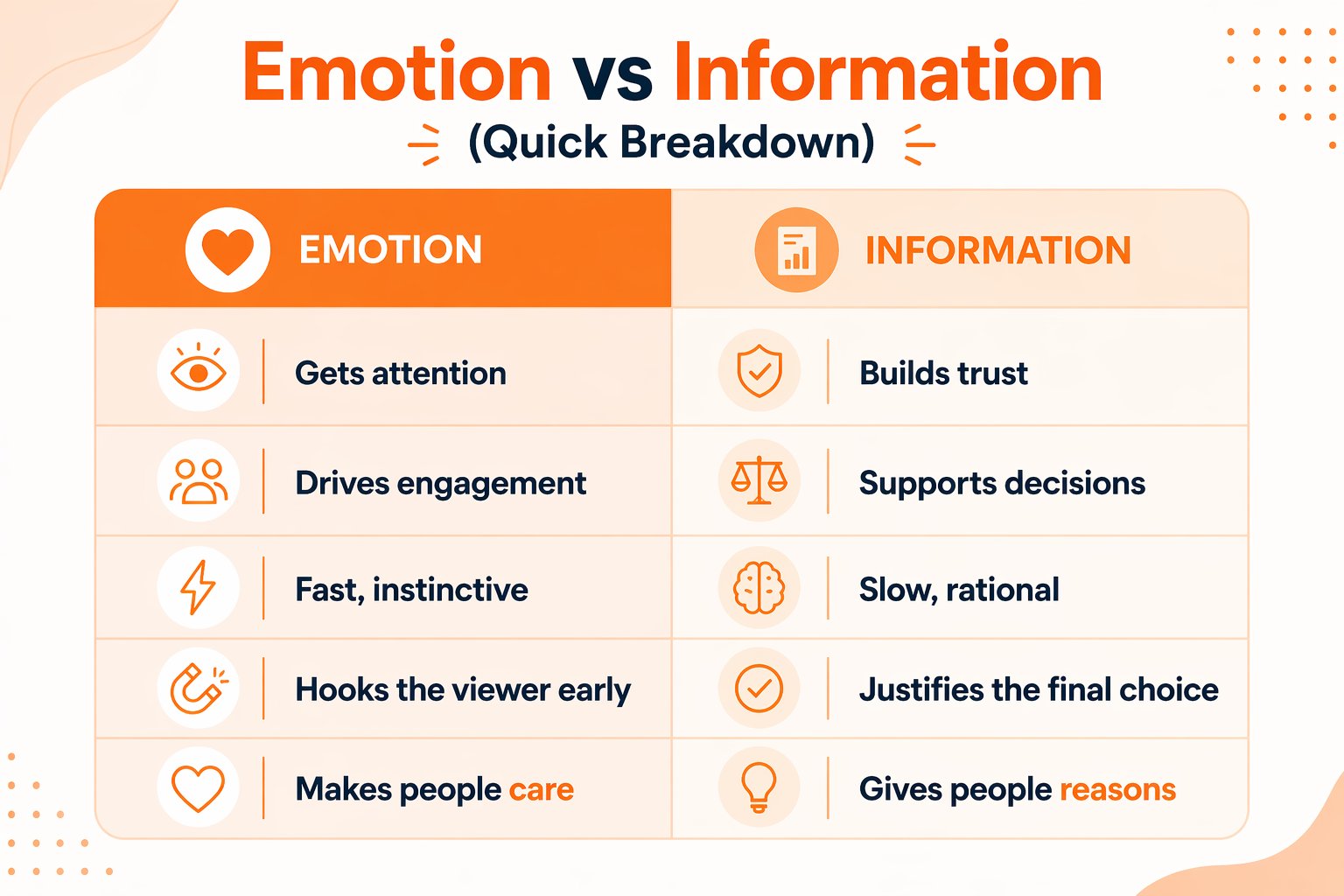
People respond to emotion first, but they rely on information to justify it. So emotion gets you watched, and information gets you chosen.
There’s actual data backing this up, too. Large-scale research from the Institute of Practitioners in Advertising (IPA) shows that emotion-led campaigns drive around 31% profitability, compared to just 16% for purely rational ones. That’s almost double. On top of that, emotional ads also perform better in memory recall (81% vs 69%) (IPA Databank).
When someone watches an explainer video, they’re not sitting there thinking, “Let me carefully evaluate these features.”
They’re subconsciously asking:
- “Is this relevant to me?”
- “Do I care?”
- “Should I keep watching?”
Emotion answers those questions instantly.
There’s a reason emotional triggers (like curiosity, frustration, relief, or aspiration) are so powerful. Neuroscience research shows emotional stimuli are directly tied to attention and memory systems in the brain (The Media Ant). In simple terms: if it doesn’t make you feel something, your brain doesn’t prioritize it.
But does that mean information doesn’t matter? Not even close. This is where a lot of people get it wrong.
Information is what helps people justify a decision, especially in industries like SaaS, finance, or healthcare. In those cases, viewers still need logic, proof, and clarity before they commit (MarCom Today). In fact, multiple studies show the most effective approach isn’t choosing one over the other. It’s combining both:
- Emotion to hook attention and create connection
- Information to build trust and close the decision
Some researchers even describe this as an “emotion-logic loop.” So you pull people in emotionally, then reinforce that feeling with rational proof.
How Does Industry Context Change What People Feel?
The industry you’re in completely changes which emotions people are open to and which ones they’ll reject instantly.
I’ve seen the exact same storytelling approach work beautifully for one client and completely fall flat for another, just because the audience’s expectations were different. What feels engaging in one space can feel tone-deaf in another.
It starts with what’s at stake
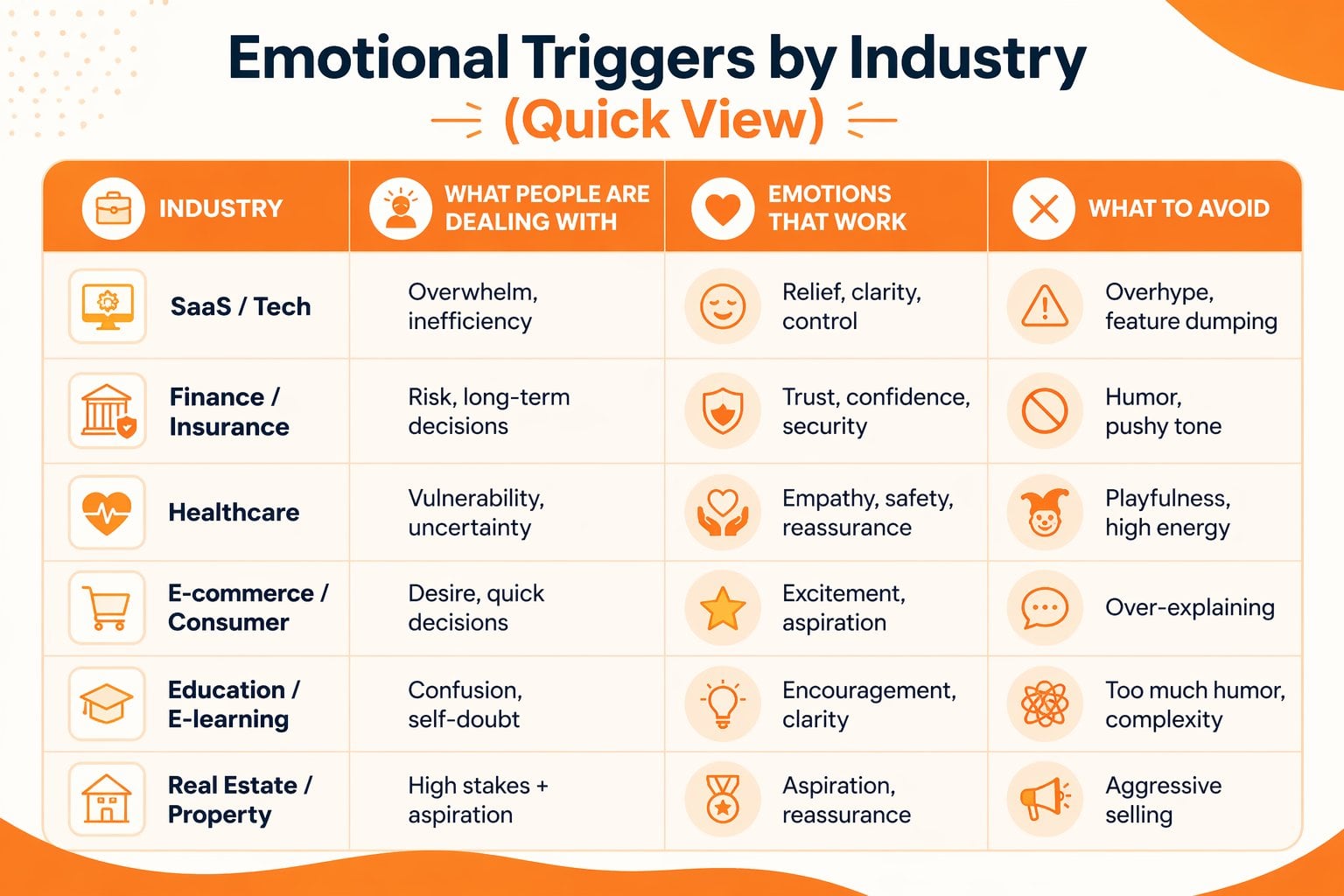
Different industries carry different levels of risk, and that directly shapes emotional response.
- In SaaS, people are usually dealing with inefficiency, frustration, or time pressure. Emotions like relief, clarity, and control tend to land well.
- In finance, there’s more caution. You’re dealing with trust, security, and long-term consequences. So emotions like confidence and reassurance matter more than excitement.
- In healthcare, it gets even more sensitive. People are often in a vulnerable state, so the tone needs to lean into empathy and safety.
- In e-commerce or consumer brands, the stakes are lower, so you can lean into excitement, desire, and aspiration much more freely.
- In education or e-learning, people are often unsure or intimidated, so emotions like encouragement and clarity tend to work better than intensity.
- In real estate or property, there’s a mix of aspiration and risk, so you’re balancing dreams with reassurance.
Audience mindset changes everything
When someone watches a product video for a project management tool, they’re usually thinking: “Will this make my life easier?”
But when they watch something related to insurance or healthcare, the mindset shifts to: “Can I trust this?” or even “Is this safe for me?”
That subtle shift changes everything about how you design the emotional trigger.
The same emotion can feel different depending on context
This is where it gets interesting. Take humor, for example.
- In a startup or SaaS explainer, humor can make the brand feel approachable and modern.
- In finance, the same joke can come off as unprofessional.
- In healthcare, it can feel outright inappropriate if it’s not handled carefully.
- In education, too much humor can sometimes make the content feel less credible.
It’s not that humor is “good” or “bad.” It’s just that its impact changes based on context. I’ve had moments where we had to dial something back because it didn’t fit the emotional expectations of the industry.
Emotional triggers need to align with decision-making style
Another pattern I’ve noticed: different industries lean more emotional or more rational, but none are purely one or the other.
- B2C / lifestyle-heavy industries → quicker, emotion-led decisions (aspiration, excitement, belonging)
- B2B / high-investment industries → slower, logic-supported decisions (trust, credibility, certainty)
But even in B2B, emotion still comes first, but it’s just more subtle. No one says, “I feel excited about this compliance software.” But they do feel relieved, secure, or confident, and those are still emotional triggers.
What Emotional Triggers Work Best in Different Industries?
Every industry has a “default emotion” that works. If you hit it right, everything feels natural. If you miss it, even a well-made video feels off.
I’ll keep this practical. These are patterns I’ve seen consistently across projects.
SaaS & Tech: Why Does “Relief” Work So Well?
People are already overwhelmed. So they’re looking for things to feel easier. In most SaaS projects I’ve handled, the strongest hook isn’t “look how powerful this is.”
| What works | What doesn’t |
| Relief (this solves my problem) | Overhyped excitement |
| Clarity (I finally get it) | Feature-heavy intros with no context |
| Control (I’m back in charge) | No clear context upfront |
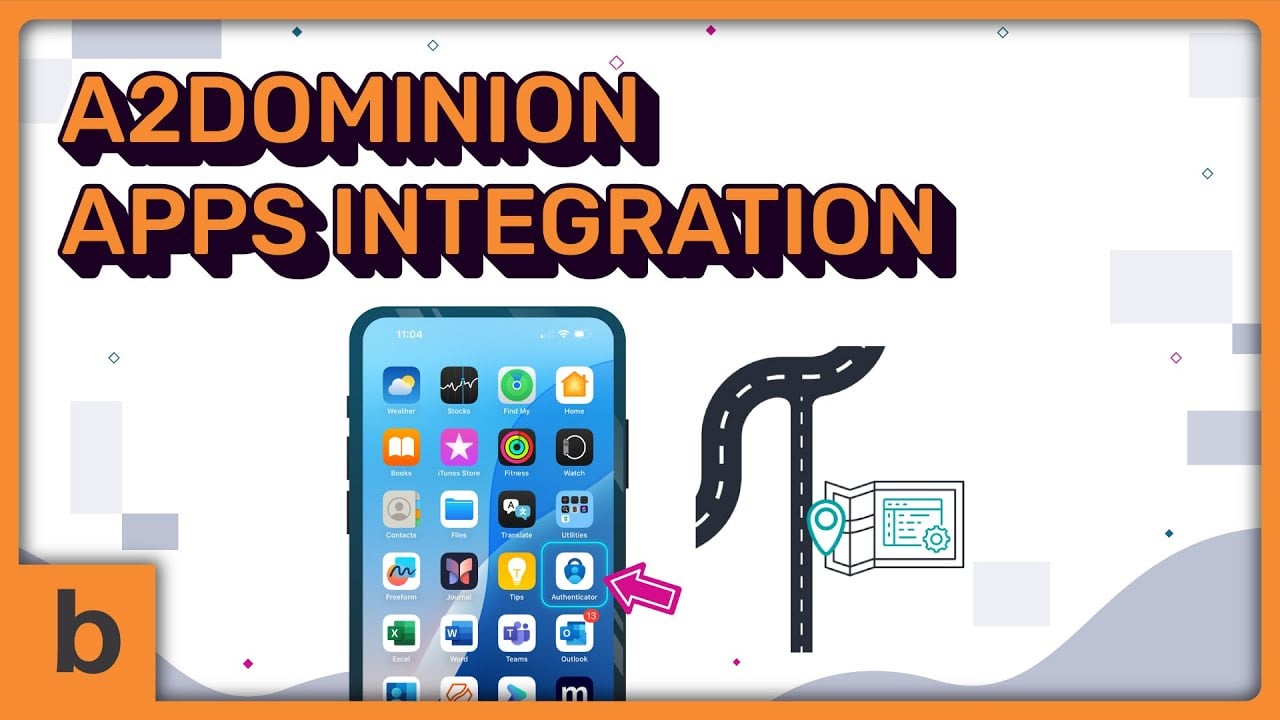
I include this video we created for A2Dominion. We approached it from the audience’s perspective, where we faced a lot of moving parts and needed a clear path forward. We didn’t try to highlight how much the system can do, we focused on making it feel less complicated. Because in SaaS and tech, clarity itself becomes the relief.
Finance & Insurance: Why Is Trust More Important Than Excitement?
People are cautious here. If it feels even slightly off, they disengage. In finance-related explainers, I’ve learned to dial things down. The goal is to reassure.
| What works | What doesn’t |
| Security (my money is safe) | Aggressive sales tone |
| Confidence (this is reliable) | Humor that feels out of place |
| Stability (this feels solid and proven) | Anything that feels rushed or pushy |
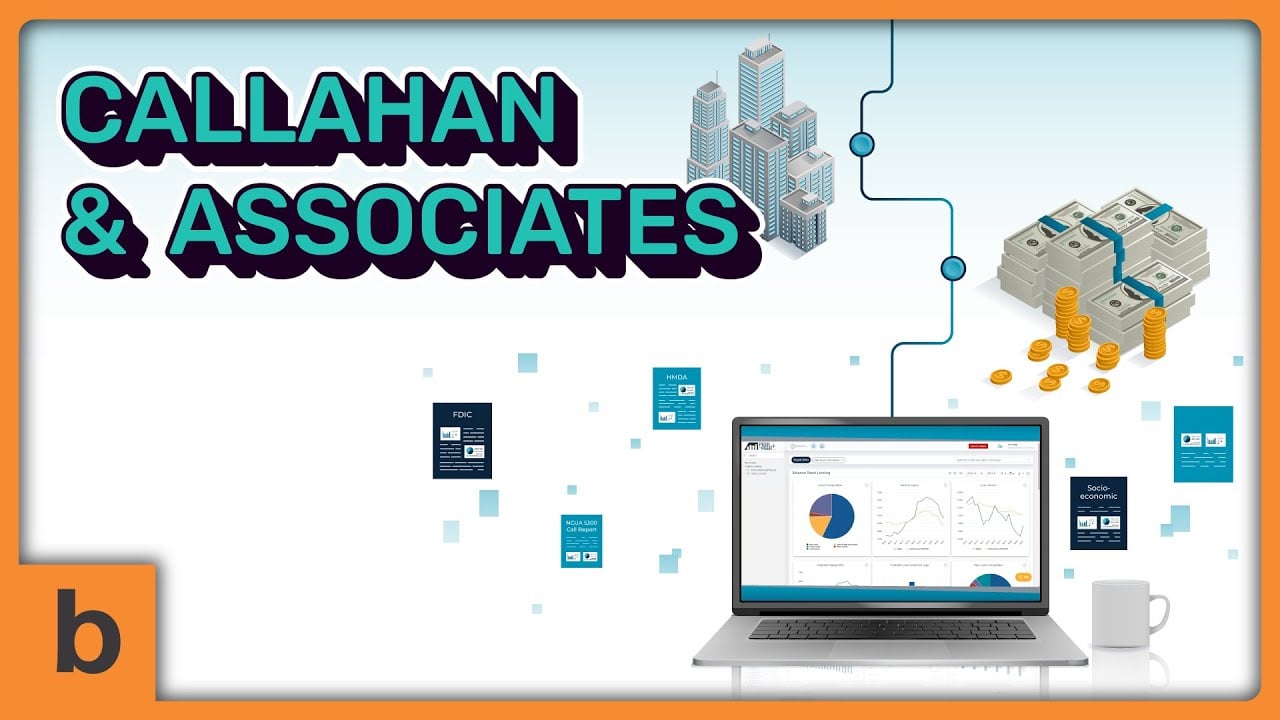
We created this video for Callahan, and the goal was to make it feel steady and reliable. We kept the tone calm, avoided anything too salesy, and focused on clarity over persuasion. If it doesn’t feel trustworthy right away, people won’t stick around long enough to care about anything else.
Healthcare: Why Does Empathy Matter More Than Everything Else?
You’re speaking to people who might be stressed, confused, or vulnerable. Tone matters more than creativity here.
| What works | What doesn’t |
| Empathy (you understand what I’m going through) | Overly playful tone |
| Reassurance (I’m in good hands) | Fast-paced, high-energy storytelling |
| Calm clarity (this isn’t overwhelming) | Anything that minimizes the seriousness of the situation |
Working on the video for PDI Healthcare, we knew the tone had to stay measured throughout. The message around maintaining a sanitary environment carries weight on its own, it doesn’t need to be dressed up. When the subject is serious, the delivery needs to respect that.

E-commerce & Consumer Brands: Why Does Aspiration Drive Action?
People buy how it makes them feel. This is where you can lean more into emotional storytelling.
| What works | What doesn’t |
| Aspiration (I want this version of my life) | Over-explaining |
| Excitement (this feels fun, desirable) | Too much logic upfront |
| Belonging (this fits who I am) | Dry, feature-led messaging |
Here’s another example:
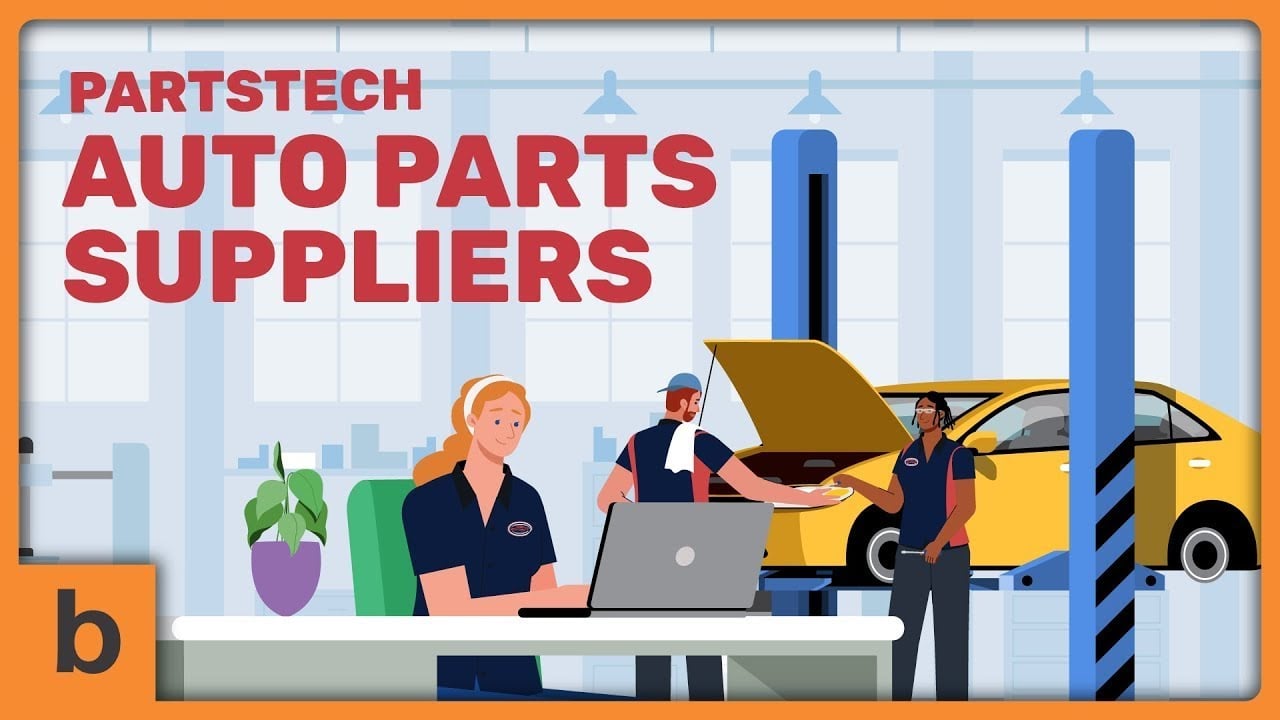
For the PartsTech project, the shift was moving away from pure functionality and toward experience. We highlighted what it feels like to have everything streamlined in one place. That sense of ease and progress is often what drives action in consumer-focused spaces.
B2B Services: Why Is “Confidence” the Real Trigger?
No one wants to make a bad decision on behalf of their company. In B2B, the emotional layer is quieter, but it’s still there.
| What works | What doesn’t |
| Confidence (this is the right call) | Overpromising |
| Competence (these people know what they’re doing) | Flashy storytelling with no substance |
| Risk reduction (this won’t backfire) | Vague messaging |
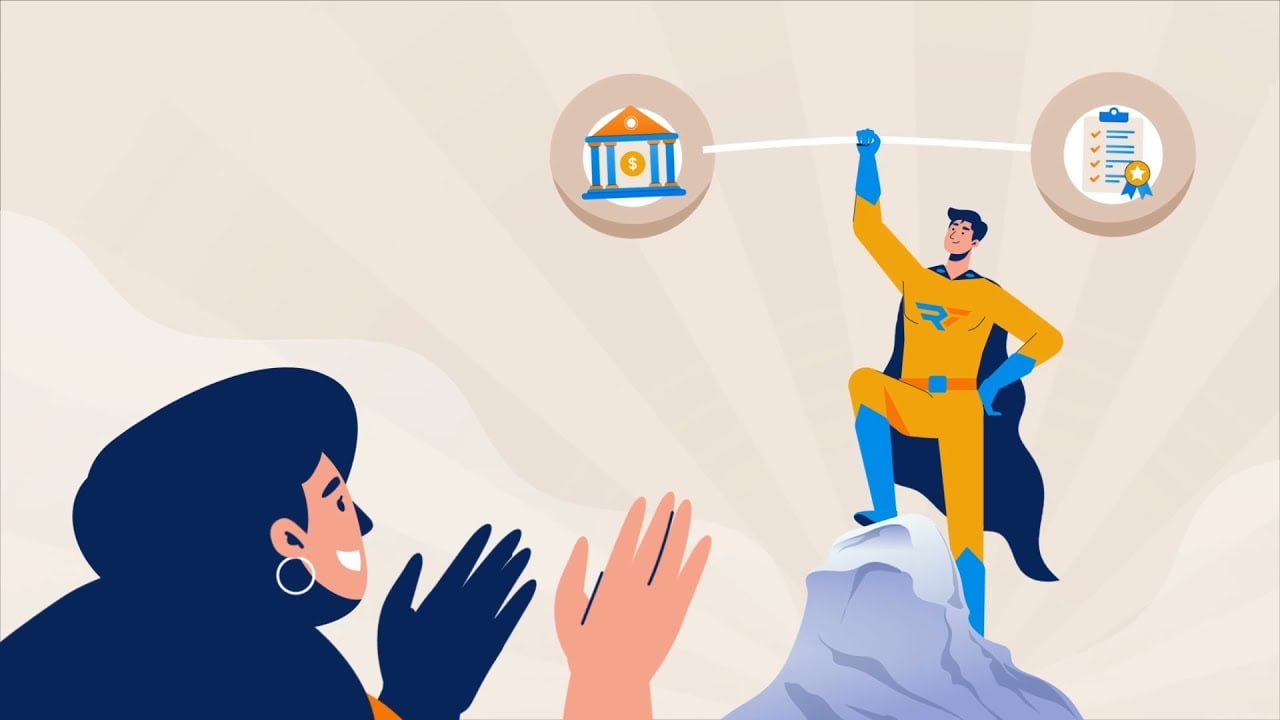
With Results Technology, we used a more playful, character-led story to keep things engaging. But we were careful not to let that overshadow the message. The flow of the explanation draws people in, but the sense of confidence is what carries them through.
How Do You Choose the Right Emotional Trigger for Your Audience?
I don’t start with the product. I start with how the audience already feels before they even hit play. That’s usually where the right emotional trigger reveals itself. Not from the feature list, not from the brand voice, but from the viewer’s current state.
Start with the emotional baseline
Every audience comes in with something.
- Stressed
- Skeptical
- Overwhelmed
- Curious but hesitant
If I get this wrong, everything else feels off. If I get it right, the script almost writes itself.
For example, in SaaS, I’ll often start with frustration, because that’s real. In finance, it’s usually caution. In healthcare, it’s uncertainty. I’m not trying to create emotion from scratch. I’m tapping into what’s already there.
Then define the “after” feeling
Once I know how they feel now, the next question is: how should they feel by the end of the video? That gap is where the emotional trigger lives.
- From overwhelmed → to in control
- From skeptical → to confident
- From confused → to clear
If there’s no emotional shift, the video might inform, but it won’t move anyone.
Match emotion with decision type
Not every decision feels the same, and this part gets overlooked a lot.
- Quick, low-risk decisions → you can lean into excitement, aspiration
- High-stakes decisions → you need trust, reassurance, credibility
I’ve seen videos fail simply because the emotion didn’t match the weight of the decision. It felt either too heavy or too casual.
Pressure-test it early
One thing I always ask before locking a direction: “Does this feel natural for this audience or are we forcing it?”
Because forced emotion is easy to spot. If we’re adding humor just to make it “engaging,” or pushing inspiration where it doesn’t belong, it shows. And once it does, trust drops immediately.
What it looks like in practice
When we’re building a script, I usually simplify it down to something like this:
- Current state: what are they feeling right now?
- Trigger: what moment makes them lean in?
- Shift: what changes emotionally?
- Resolution: what do they feel at the end?
Turns Out, Less Really Does More
Clarity, especially in explainer video production, comes from focusing on the one emotional thread that makes everything else make sense.
When that’s clear, the structure feels tighter, the message feels sharper, and the whole video just flows better. You’re not trying to convince people anymore. You’re guiding them toward a feeling that already makes sense to them.
At Breadnbeyond, there’s usually a point in a project where everything feels “almost right,” just a bit too crowded. The fix is rarely adding more. It’s choosing what actually matters and letting everything else get out of the way.
In most of our consultations, we also ask about the emotional side, what the audience is dealing with, and what they should walk away feeling. That one conversation usually shapes more of the video than anything that comes after.
Mini FAQ: Emotional Triggers in Explainer Videos
Do shorter explainer videos still need emotional triggers?
Yes. If anything, they need them more. With less time, you don’t have the luxury to “warm up” the audience. A clear emotional hook early on helps anchor attention quickly, even in a 30-60 second format.
Can one video have multiple emotional triggers?
It can, but it usually shouldn’t. Too many emotional directions can dilute the impact. It’s generally more effective to focus on one dominant feeling and let everything else support it.
Do visuals or script play a bigger role in delivering emotion?
They’re equally important, but visuals often carry it faster. People process visuals quicker than words, so tone, color, pacing, and animation style can set the emotional direction before the script fully unfolds.
Can emotional triggers work without a narrative or story?
Yes, but it’s harder to make them stick. A narrative naturally creates context for emotion. Without it, you need to be much more intentional with pacing, structure, and delivery to achieve the same effect.
Do returning viewers respond to the same emotional triggers?
Not always. Once someone is familiar with your product or brand, their expectations shift. What worked the first time might need to evolve to stay relevant and engaging.
Book a strategy call to turn your industry insight into a video brief that actually converts with Breadnbeyond!