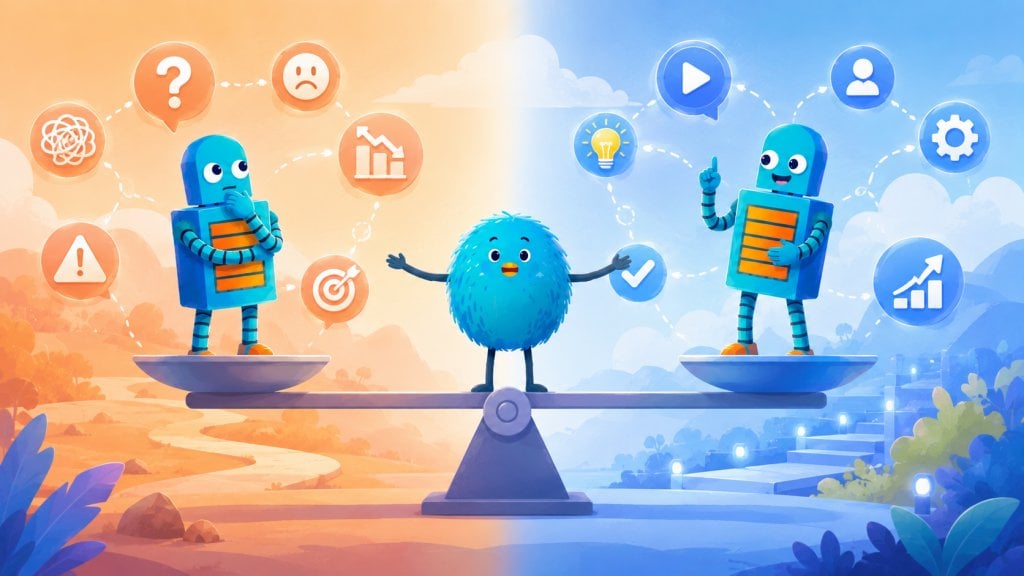
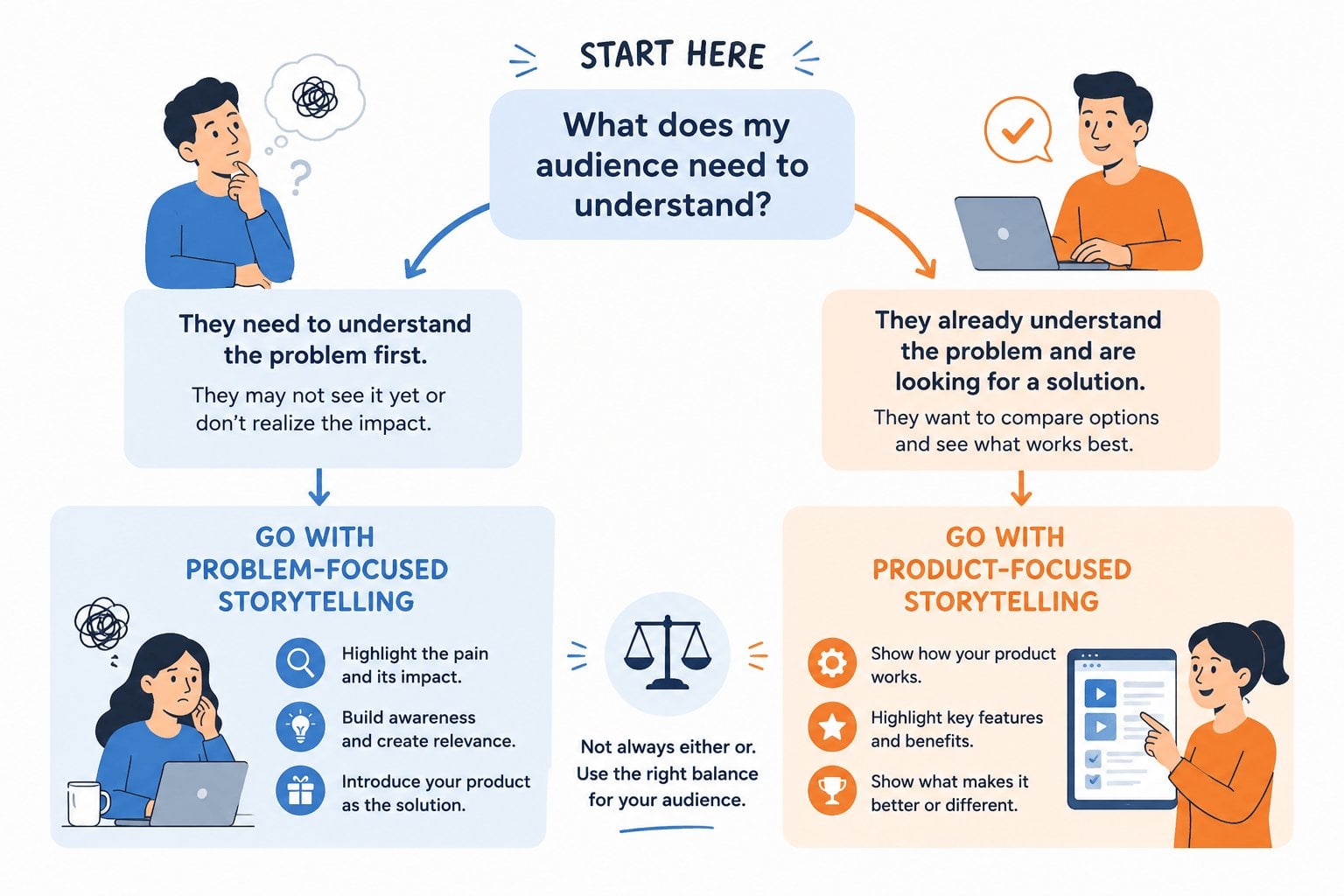
The easiest way to decide is to look at what your audience needs to understand first. If they already know the problem and are comparing solutions, product-focused storytelling usually works better. If they’re still feeling the pain or don’t fully understand why they need a solution, I’d lead with the problem.
I’ve seen this play out across plenty of video projects at Breadnbeyond. A great product can still make a weak story if the audience doesn’t care about the problem yet.
On the other hand, spending too much time on the problem can make a video feel slow when the viewer is already ready to see the solution. The trick is knowing where your audience is starting from.
What’s the Difference Between Product-Focused and Problem-Focused Storytelling?
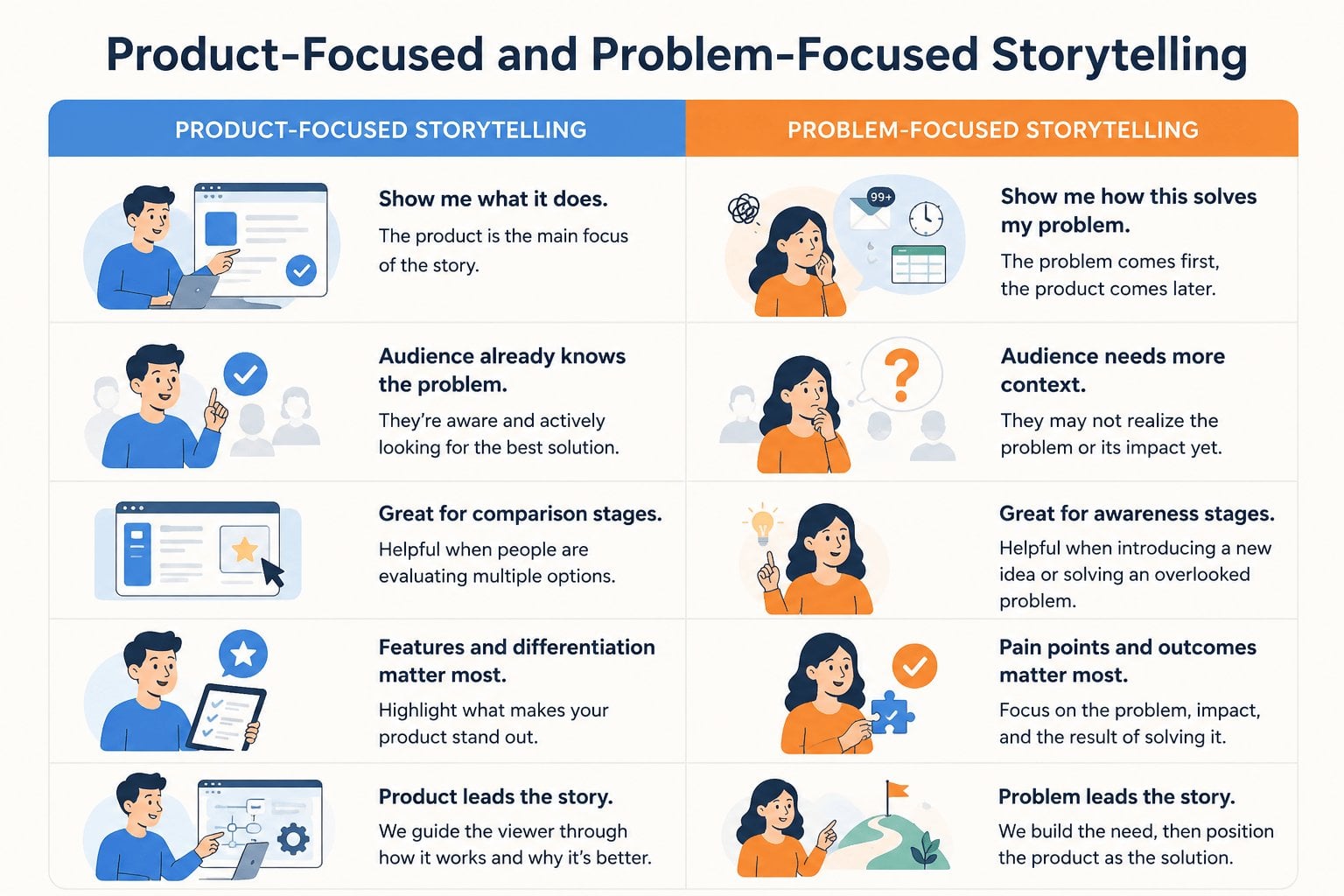
Product-focused storytelling puts the product at the center, showing what it does, how it works, and what makes it different. Problem-focused storytelling starts with the audience’s pain point, then brings in the product as the solution.
What Is Product-Focused Storytelling?
Product-focused storytelling makes the product the star of the story. The video usually spends more time showing what the product does, how it works, and why someone should choose it over the alternatives.
I often see this approach work well for products that are already easy to understand. The audience knows what they’re looking for, so they don’t need a long explanation of the problem first.
Instead, they want to see the product.
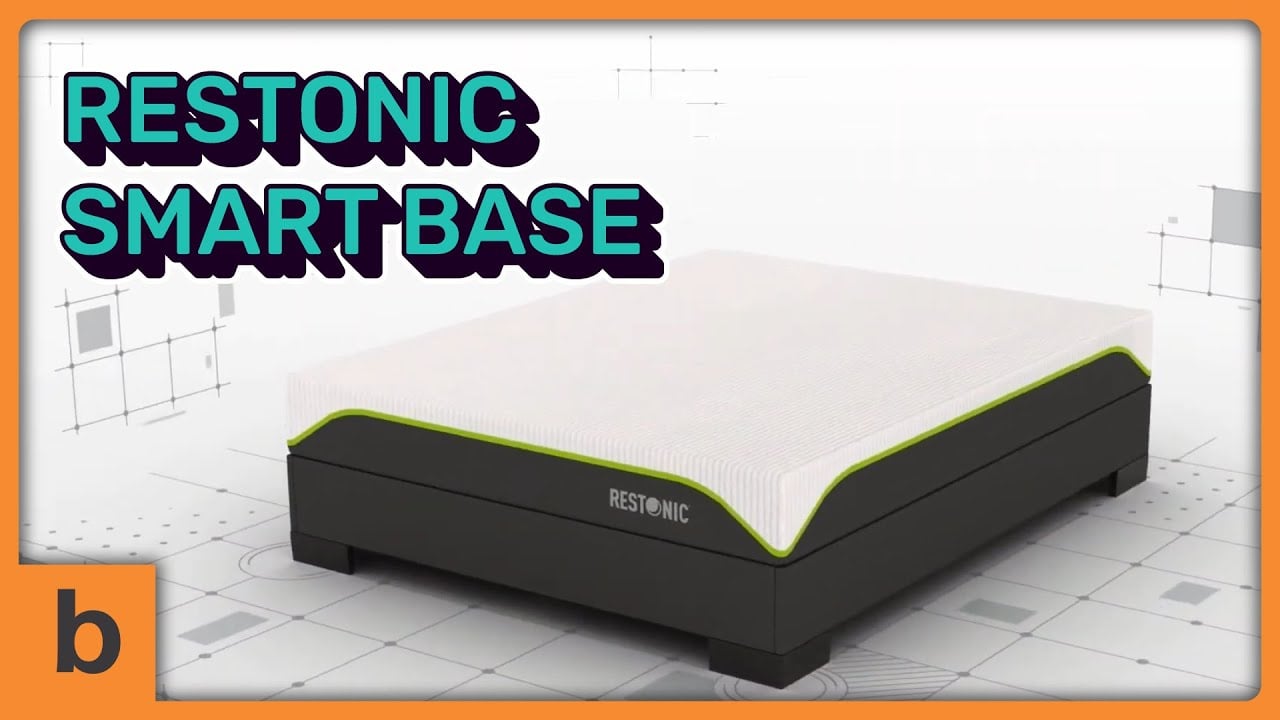
Here’s an example of a product-first video we made for Restonic Smart Base using 3D animation. We focused on showing how the product works, including its features and different functions, so viewers could quickly understand what the Smart Base can actually do.
Who Is Product-Focused Storytelling Best For?
I’d consider product-focused storytelling when the audience is already aware of the problem and is somewhere further along in the buying process. They may be comparing several products and trying to figure out which one deserves their attention.
It’s also useful when the product itself is the differentiator.
Think about a SaaS platform with a particularly clever feature, a new piece of software, or a product with a workflow that’s difficult to explain through static screenshots. Showing it in action can do a lot of the selling for you.
At Breadnbeyond, I’ve worked on plenty of explainer videos where the product needed to take center stage. In those cases, the challenge wasn’t convincing people that the problem existed. It was making the product easy to understand quickly.
A quick research note: A 2024 study published in the Journal of the Academy of Marketing Science found that step-by-step product demonstrations were more effective at increasing purchase intentions than demonstrations focused mainly on the finished result. In other words, showing how something works can sometimes be more persuasive than simply showing what you get,
What Is Problem-Focused Storytelling?
Problem-focused storytelling starts somewhere else. Instead of introducing the product immediately, it begins with something the audience already recognizes: a frustration, challenge, costly mistake, or everyday problem.
The product comes later.
This approach is especially useful when your audience may not immediately understand why your product matters. You first create that connection by showing the situation they’re dealing with, then introduce the solution when it naturally fits into the story.
Here’s a video we created for PartsTech. We started by highlighting the pain points and setting up a familiar scenario before introducing the product as the solution. This gave viewers some context first, so when PartsTech appeared, they could immediately understand why it was useful.
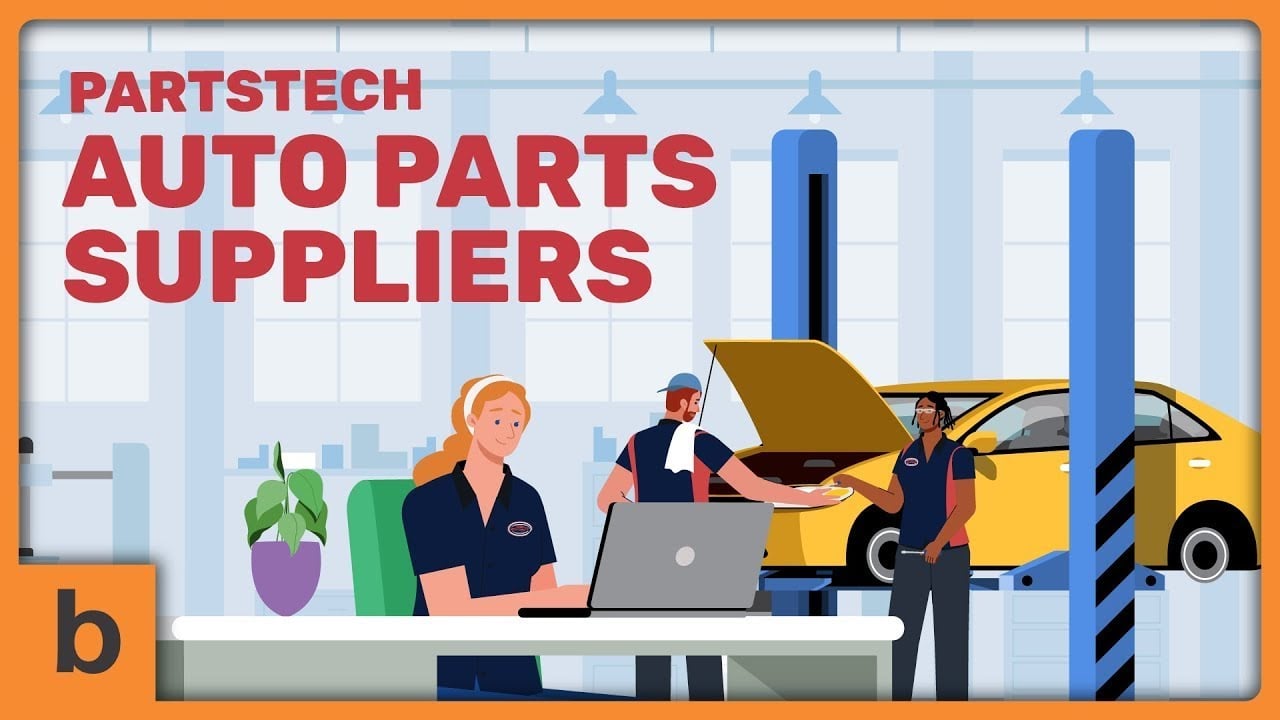
The product has a reason to appear. That’s an important difference. So instead of saying, “Here’s our software and what it can do,” you’re showing why someone would actually care about it in the first place.
Who Is Problem-Focused Storytelling Best For?
I usually lean toward this approach when the product solves a problem that isn’t immediately obvious or when the audience may not be actively searching for a solution yet.
It can also work well for newer categories. If you’re introducing something unfamiliar, jumping straight into features can leave viewers wondering why they should care.
A problem gives them some context.
This is where storytelling can be particularly helpful. Rather than throwing a list of features at the viewer, you give those features a job within the story. Each one exists because it helps solve something the audience has already seen or experienced.
I’ve found that this can make complicated products feel much easier to follow.
Can You Combine Product-Focused and Problem-Focused Storytelling?
Absolutely. In fact, many of the videos I’ve worked on at Breadnbeyond use a bit of both.
You don’t always have to pick one and completely ignore the other. A video can open with a problem, establish why it matters, and then shift the focus toward the product and how it solves that problem.
The balance depends on the audience.
If the problem is already obvious, keep that setup short. If the product is unfamiliar, give the viewer enough context before asking them to care about its features.
That’s often where the best storytelling happens. The problem gives the audience a reason to listen, while the product gives them a reason to act.
How Do You Decide Which Storytelling Approach Is Right for Your Video?
Look at what your audience already knows, what they need to understand, and where they are in the buying process. If they need to understand the pain first, lead with the problem; if they’re already looking for a solution, give the product more attention.
Does Your Audience Already Know the Problem?
This is probably the first thing I’d look at. If your audience immediately recognizes the problem, there’s little reason to spend most of the video explaining it.
Get to the useful part.
For example, if you’re marketing accounting software to small businesses, your audience probably already knows how frustrating manual bookkeeping can be. You can acknowledge that pain quickly and move on to showing how your product handles it.
But things change when the problem is less obvious.
If you’re selling a product that solves a problem people have simply learned to live with, problem-focused storytelling can help. You need to make the audience recognize the cost of doing things the old way before introducing a different option.
How Familiar Is Your Audience With the Product?
Audience familiarity matters just as much as problem awareness.
If people already know what your product category is, product-focused storytelling can make sense. They’re probably looking for differences, features, pricing, or a reason to choose your solution over another one.
That’s a very different situation from introducing something completely new.
When the category itself is unfamiliar, I’d be more careful about jumping straight into features. Viewers may understand what you’re showing but still have no idea why it matters to them.
I’ve seen this happen with technical products. A feature can sound impressive on paper, yet fall flat in a video because the audience doesn’t have enough context to understand its value.
Where Is the Audience in the Buying Journey?
I also think about where the viewer is coming from.
Someone discovering your brand for the first time probably needs a different story from someone who has already visited your website three times and is comparing your product with competitors.
Early-stage audiences often benefit from problem-focused storytelling. It gives them a reason to keep watching and helps connect the product to something they already care about.
Further along, the audience usually needs fewer introductions. They want specifics.
This is where product-focused storytelling can become much more effective. You can spend your time showing how the product works instead of convincing viewers that the problem exists.
Is the Product Difficult to Explain?
Some products are easy to describe in a sentence. Others are not.
If your product involves a complicated process, multiple features, or something that’s difficult to demonstrate through a traditional sales pitch, the storytelling approach needs a little more thought.
I often find that a problem gives complicated products a useful entry point. Instead of explaining the entire system upfront, you can show one familiar situation and introduce the relevant part of the product from there.
Then you can build from it.
That said, complexity doesn’t automatically mean you should make the entire video problem-focused. If the product itself is visually interesting or the way it works is the main selling point, showing it earlier may actually make the story easier to follow.
What Do You Want the Viewer to Remember?
This is the part I think gets overlooked.
Before deciding on the storytelling style, I’d ask myself what I want someone to remember five minutes after watching the video.
Is it the frustration you just described? The way your product solves it? A particular feature? Or simply the difference between your product and the alternatives?
Your answer can guide the structure.
At Breadnbeyond, I’ve learned that a good explainer video doesn’t need to explain everything. It needs to make the right thing memorable.
Sometimes that means giving the product most of the attention. Other times, the product works better when the audience first sees the problem it was built to solve.
Final Thoughts: Choosing the Right Story for Your Video
I’d say that choosing the right storytelling approach is often less complicated than people make it out to be. A lot of it comes down to understanding the project, talking to the people involved, and being honest about what the audience actually needs to hear.
That’s also how I prefer to work with clients. I don’t expect someone to come to us with a perfect script or a fully formed idea.
We usually start with a conversation through our consultation session, figure out what they’re trying to say, and work through the direction together.
I’m proud that our team at Breadnbeyond has kept that part of the process fairly simple. People can ask questions, challenge an idea, or say, “I don’t think this is working,” without making the whole process awkward. Good creative work needs that kind of back-and-forth.
If you’re planning an explainer video and you’re still unsure how to tell the story, feel free to reach out to us at Breadnbeyond. We’re happy to talk it through before you commit to a direction.
FAQ About Product-Focused and Problem-Focused Storytelling
Can storytelling work for products that serve multiple audiences?
Yes. You can build one core story around the product while adjusting the examples, language, or emphasis for different audience segments.
How long should the storytelling setup be in a video?
There’s no fixed rule. Keep the setup long enough to establish the context, then move forward once the viewer understands why the story matters.
Should the storytelling style affect the visual direction?
It can. A product-led story may benefit from more interface demonstrations or product shots, while a narrative-led story may need more characters, environments, and visual situations.
Can storytelling influence how a product is perceived?
Definitely. The way you frame the story can make a product feel technical, approachable, practical, premium, or highly specialized.
Does the same storytelling approach work across different industries?
The underlying principles can, but the execution usually needs to change. A healthcare product, SaaS platform, and consumer app may require very different language, pacing, and examples.