Table of Contents ×
- 1 What Are Diversity and Inclusion Training Videos?
- 2 What Should a Diversity and Inclusion Training Video Include?
- 3 How to Create an Effective Diversity and Inclusion Training Video
- 4 What Video Styles Work Best for Diversity and Inclusion Training?
- 5 Conclusion: Making Diversity and Inclusion Training More Effective With Video
- 6 FAQs About Diversity and Inclusion Training Videos
Create effective diversity and inclusion training videos by using clear, engaging, and inclusive content that reflects diverse perspectives, avoids stereotypes, and gives employees practical ways to build a more respectful and inclusive workplace.
Running an explainer video company means seeing all kinds of employee training content come across my desk. Some videos get the message across; others feel like a corporate presentation with a voiceover.
For diversity and inclusion, the difference matters. A good training video should feel human, relatable, and engaging enough that employees actually want to keep watching.
The goal is to make the message easier to understand, remember, and apply when employees encounter similar situations in their everyday work.
I’m writing this article to share what goes into making these training videos more engaging, relatable, and genuinely useful for employees.
What Are Diversity and Inclusion Training Videos?
Diversity and inclusion training videos are educational videos designed to help employees understand and practice behaviors that create a more respectful, equitable, and inclusive workplace.
They can be used to explain D&I (Diversity and Inclusion) concepts, demonstrate real workplace situations, and give employees practical ways to respond.
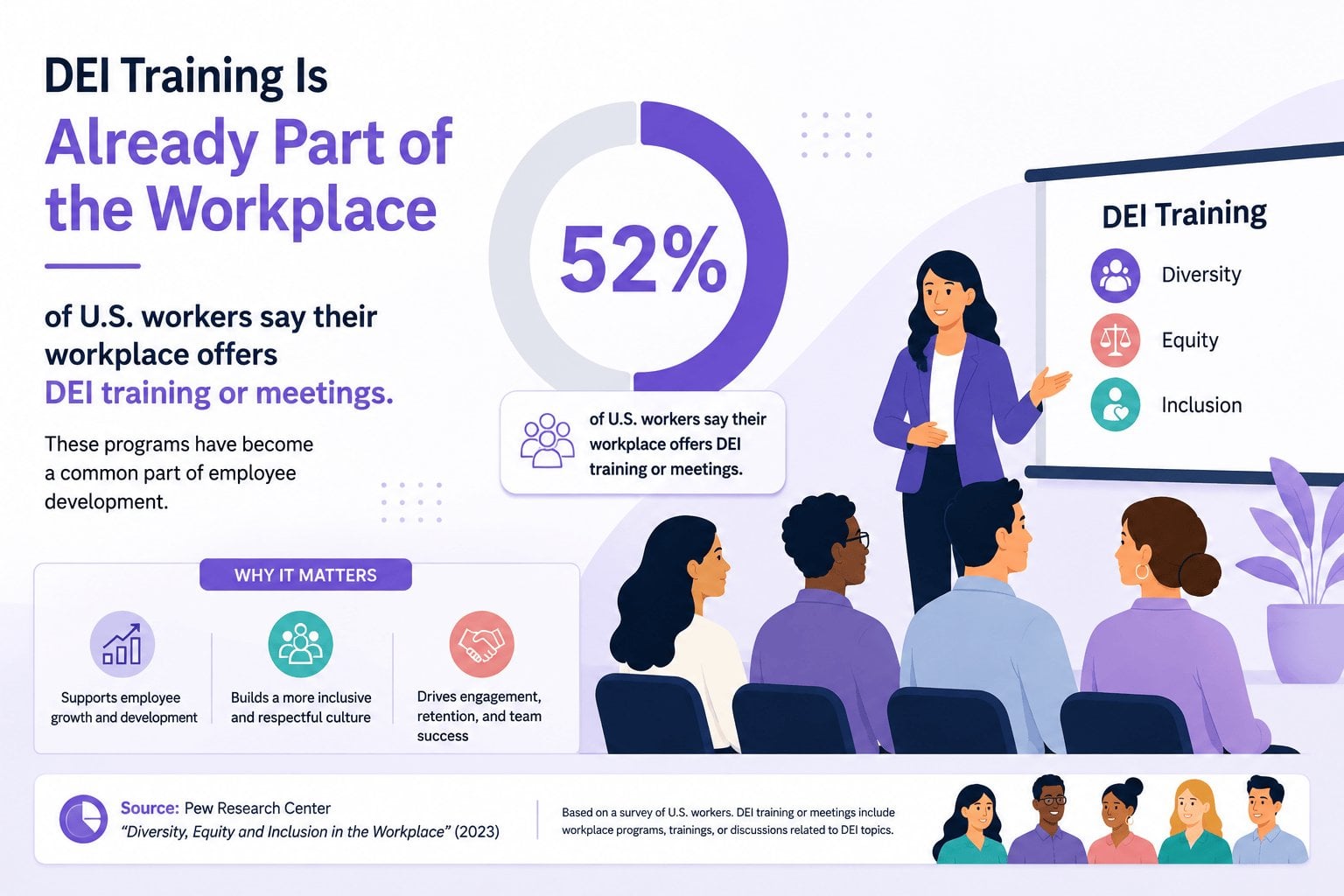
Source: Pew Research Center
From my perspective, the biggest advantage of using video is that it can make these topics feel less abstract.
Instead of simply defining unconscious bias or explaining why inclusive communication matters, you can show employees what these issues actually look like in a workplace.
What Topics Do Diversity and Inclusion Training Videos Cover?
The content can vary depending on the company and its training goals, but common topics include:
- Unconscious bias and stereotypes
- Inclusive communication
- Workplace discrimination and harassment
- Microaggressions
- Cultural awareness
- Gender and racial inclusion
- Accessibility and disability inclusion
- Inclusive leadership
- Building a sense of belonging
Rather than trying to cover every D&I topic in one video, I recommend focusing each training video on a specific learning objective.
A clear focus makes the message easier to follow and much easier to remember.
The key is to connect these topics to situations employees are likely to encounter.
A short scenario showing how a manager responds to an employee’s idea, for example, can communicate more than several paragraphs of policy language.
How Do Diversity and Inclusion Training Videos Fit Into Employee Training?
D&I videos don’t necessarily have to replace existing training. I often see video work best as part of a broader learning experience.
A company might use a short video during onboarding, as part of annual training, or alongside an online course.
Videos can also introduce a topic before a workshop or discussion, giving employees a common scenario to think about before the session begins.
This flexibility makes video useful for both in-person and remote teams.
Employees can access the same core training wherever they work while still having opportunities for discussion and follow-up activities.
Why Are Diversity and Inclusion Training Videos Important?
Diversity and inclusion training is ultimately about changing understanding and behavior, not just completing a training requirement.
Deloitte’s 2024 global survey of 10,000 people across 20 countries found that 41% had experienced microaggressions, harassment, or bullying at work in the previous year.
Video can help bridge that gap by showing employees how D&I principles apply to everyday workplace interactions.
When employees can recognize themselves, their colleagues, or familiar situations in the training, the message becomes more relevant.
And when the content is clear, realistic, and thoughtfully produced, it has a better chance of staying with them long after the video ends.
What Should a Diversity and Inclusion Training Video Include?
A good diversity and inclusion training video should do more than explain D&I concepts. It should help employees recognize real workplace situations, understand why certain behaviors matter, and know what they can do differently.
When I work on training videos, I find that the strongest ones usually combine realistic scenarios, inclusive representation, and clear takeaways.
Realistic Workplace Scenarios
Real situations make D&I concepts easier to understand and relate to.
Instead of simply telling employees that unconscious bias exists, for example, a video can show how it might influence a hiring decision, team discussion, or performance review.
These scenarios also give employees an opportunity to think about how they would respond.
A well-written situation can turn an abstract concept into a practical learning experience.
Inclusive Language and Representation
The language and visuals used in the video should reflect the diversity of the people watching it.
This means being thoughtful about gender, race, culture, age, disability, and other forms of representation.
I also believe representation should feel natural rather than forced.
Employees should be able to see different people and perspectives represented without the video turning diversity itself into a stereotype.
Clear and Actionable Takeaways
Employees should finish the video knowing what they can actually do with what they’ve learned.
For example, a video about inclusive communication could provide simple actions such as listening without interrupting, avoiding assumptions, and making space for different perspectives.
These practical takeaways make the training easier to apply beyond the screen.

How to Create an Effective Diversity and Inclusion Training Video
Creating an effective diversity and inclusion training video starts with more than choosing the right animation style or writing an informative script. The content needs to be purposeful, relevant, and designed around how employees actually learn.
I recommend these processes when creating a D&I training video.
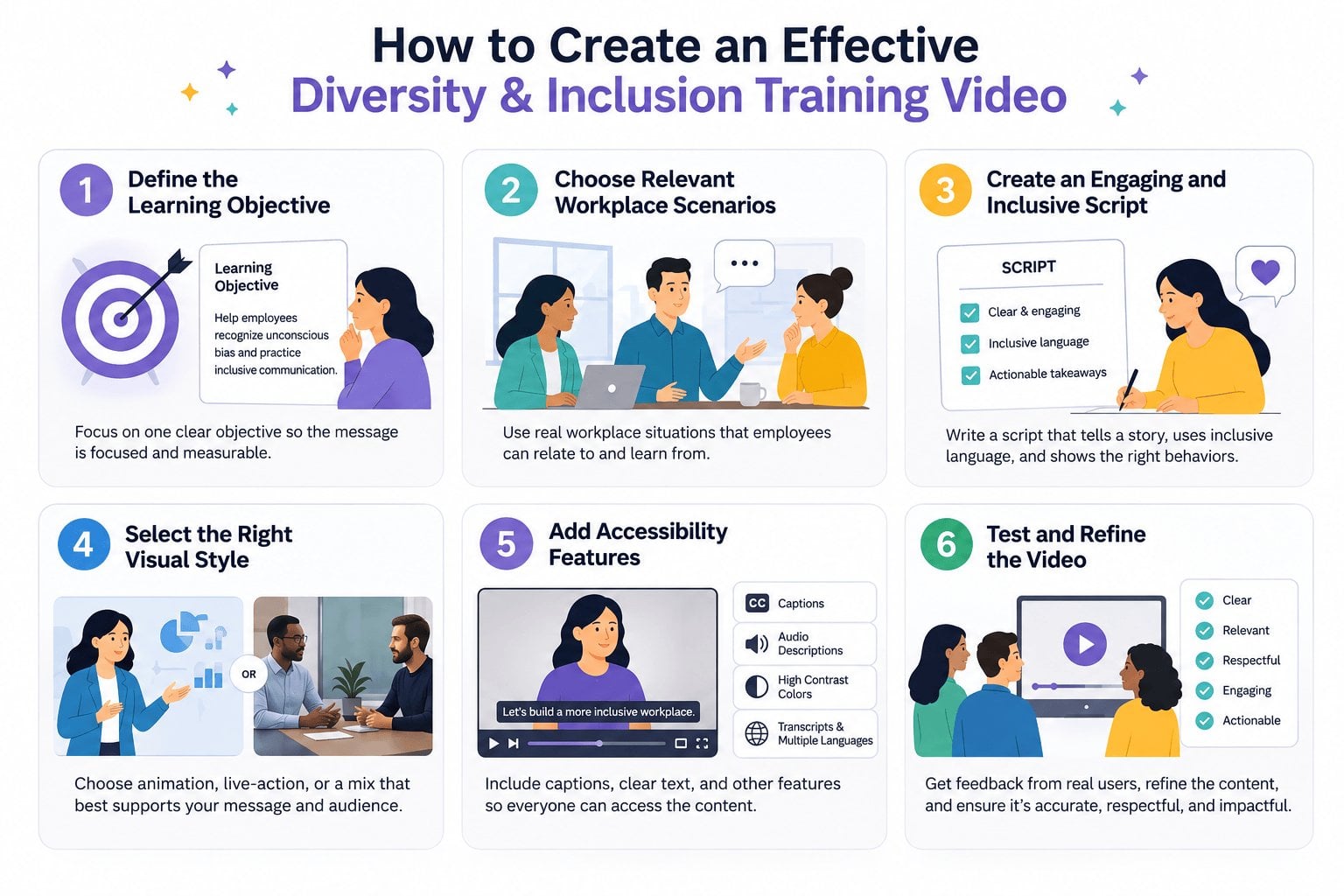
1. Define the Learning Objective
Start by deciding what employees should understand or be able to do after watching the video.
Instead of trying to cover every aspect of diversity and inclusion, focus on one clear objective.
For example, the goal might be to help employees recognize unconscious bias or practice more inclusive communication.
A focused objective keeps the script concise and makes it easier to measure whether the training worked.
2. Choose Relevant Workplace Scenarios
Once you know the objective, build the training around situations employees can recognize.
Think about the conversations, decisions, and interactions that happen in a typical workday.
A scenario involving a team meeting, hiring decision, or manager-employee conversation can make an otherwise abstract D&I concept much easier to understand.
3. Create an Engaging and Inclusive Script
The video script should explain the concept without sounding like a policy document being read aloud.
I prefer using storytelling and dialogue to let employees see the issue unfold naturally.
The script should also use inclusive language and avoid presenting stereotypes as representative of an entire group.
Most importantly, employees should come away with a clear understanding of what the right behavior looks like.
4. Select the Right Visual Style
The visual approach should support the subject matter rather than distract from it.
Animation and motion graphics can be useful for explaining concepts, while live-action or character-based scenarios can make workplace interactions feel more realistic.
For some training, a combination of both can work well.
The right choice ultimately depends on the audience, learning objective, and complexity of the topic.
5. Add Accessibility Features
D&I training should be accessible to as many employees as possible.
At a minimum, consider adding captions and clear on-screen text so employees can follow the content even without sound.
Depending on the audience, you may also need features such as audio descriptions, accessible color choices, transcripts, or multiple language versions.
6. Test and Refine the Video
Before rolling the video out company-wide, test it with a small group of employees or stakeholders.
Look for areas that feel unclear, unrealistic, overly lengthy, or unintentionally insensitive.
This step is especially important for D&I content because small wording or visual choices can change how a message is perceived.
I’d rather catch those issues during testing than after the video has already been distributed to the entire organization.
What Video Styles Work Best for Diversity and Inclusion Training?
There isn’t one video style that works for every diversity and inclusion training program. The best choice depends on the topic, audience, and learning objective.
In my experience, the most effective approach is to choose a visual style that makes the subject easier to understand without taking attention away from the message.
Animated Explainer Videos
Animation is a great option for simplifying complex D&I concepts such as unconscious bias, stereotypes, or inclusive workplace practices.
Visual metaphors, character animation, and motion graphics can make abstract ideas easier to grasp.
It also gives you more creative control over how people, situations, and concepts are represented.
Here’s a quick look at our animated showreel to see how these techniques can bring training content to life:
Live-Action Videos
Live-action videos, on the other hand, can make training feel more realistic, particularly when the goal is to demonstrate workplace interactions.
For example, you can show a manager responding to an employee, a team handling a disagreement, or colleagues navigating an uncomfortable conversation.
These situations can feel more immediate because employees see people dealing with scenarios that resemble their own workplace.
Scenario-Based Videos
Scenario-based training puts employees directly into situations they may encounter at work.
The video might present a problem and ask viewers to consider how they would respond before showing a possible solution.
I particularly like this format for D&I training because it encourages employees to think rather than simply watch.
It can turn the training into an active learning experience.
Whiteboard or Motion Graphics
Whiteboard animation and motion graphics work well when the training needs to explain policies, definitions, processes, or key statistics.
They can keep information visually interesting while maintaining a relatively straightforward presentation.
This style is especially useful when the subject matter is more informational than scenario-driven.
Mixed-Media Videos
Sometimes, the best approach is not to stick to one style.
Mixed-media videos can combine interviews, live-action footage, animation, motion graphics, and other visual elements in a single training experience.
For example, you might use a live-action scenario to introduce a workplace issue, then switch to animation to explain the concept behind it.
This flexibility can make longer or more complex D&I training easier to follow.
I’d choose the style based on what employees need to learn, rather than choosing a style simply because it looks good. The visuals should always support the learning objective.
Conclusion: Making Diversity and Inclusion Training More Effective With Video
Diversity and inclusion training works best when employees can connect what they’re learning to situations they may actually encounter at work.
That’s where video can be especially valuable.
From explaining complex concepts to showing realistic workplace interactions, video gives companies a flexible way to make D&I training more engaging, relatable, and actionable.
However, the format itself isn’t what makes a training video effective.
The content needs a clear objective, authentic representation, and practical takeaways that employees can apply beyond the screen.
At Breadnbeyond, we help companies turn complex training topics into engaging visual experiences.
If you’re looking to create a diversity and inclusion training video that your employees will actually connect with, get in touch with our team to discuss your project.
FAQs About Diversity and Inclusion Training Videos
1. What is a diversity and inclusion training video?
A diversity and inclusion training video is an educational video that helps employees understand D&I concepts and apply inclusive behaviors in the workplace. It can use explanations, storytelling, animation, or realistic scenarios to make topics such as unconscious bias, microaggressions, and inclusive communication easier to understand.
2. How long should a D&I training video be?
There’s no fixed ideal length. I generally recommend keeping each video focused on one learning objective rather than trying to cover too much in a single session.
For a specific concept, a short video of a few minutes can often be more effective than a long presentation. If the training requires more depth, consider breaking it into several shorter videos that employees can complete as part of a larger learning program.
3. What topics should D&I training videos cover?
The topics should depend on your organization’s goals and the situations employees are likely to encounter. Common topics include unconscious bias, workplace discrimination, microaggressions, inclusive communication, cultural awareness, accessibility, and inclusive leadership.
4. Are animated videos effective for diversity training?
Yes. Animation can be particularly effective for explaining complex or sensitive D&I topics because it gives you greater control over how concepts and scenarios are presented. I’ve found that animation works especially well when the goal is to simplify an abstract concept or create a relatable workplace scenario without relying on a live-action production.
5. How can companies measure the effectiveness of D&I training?
Companies can measure effectiveness through a combination of training completion rates, knowledge assessments, employee feedback, and follow-up surveys. For longer-term programs, organizations can also look at changes in workplace behaviors, employee engagement, and other relevant culture indicators.