Table of Contents ×
Most explainer video delays come from planning, communication, and decision-making, not the animation process itself.
For every project, we want to finish as early and smoothly as possible. Our clients get the results they’re looking for within the expected timeline, and our team can move on to the next exciting project. That’s a win-win, right?
But even though delays don’t happen often at Breadnbeyond, they can still happen.
A late approval, a change in direction, or a missing piece of information can slowly push the deadline further.
That’s why I’m writing this.
I want to share some of the common things that can delay an explainer video production timeline, so you know what to watch out for before starting your next project.
What Usually Causes an Explainer Video Production Timeline to Get Delayed?
Explainer video delays usually happen because of small things that slow the project down over time. Most delays come from unclear decisions, changing directions, or waiting for important feedback.
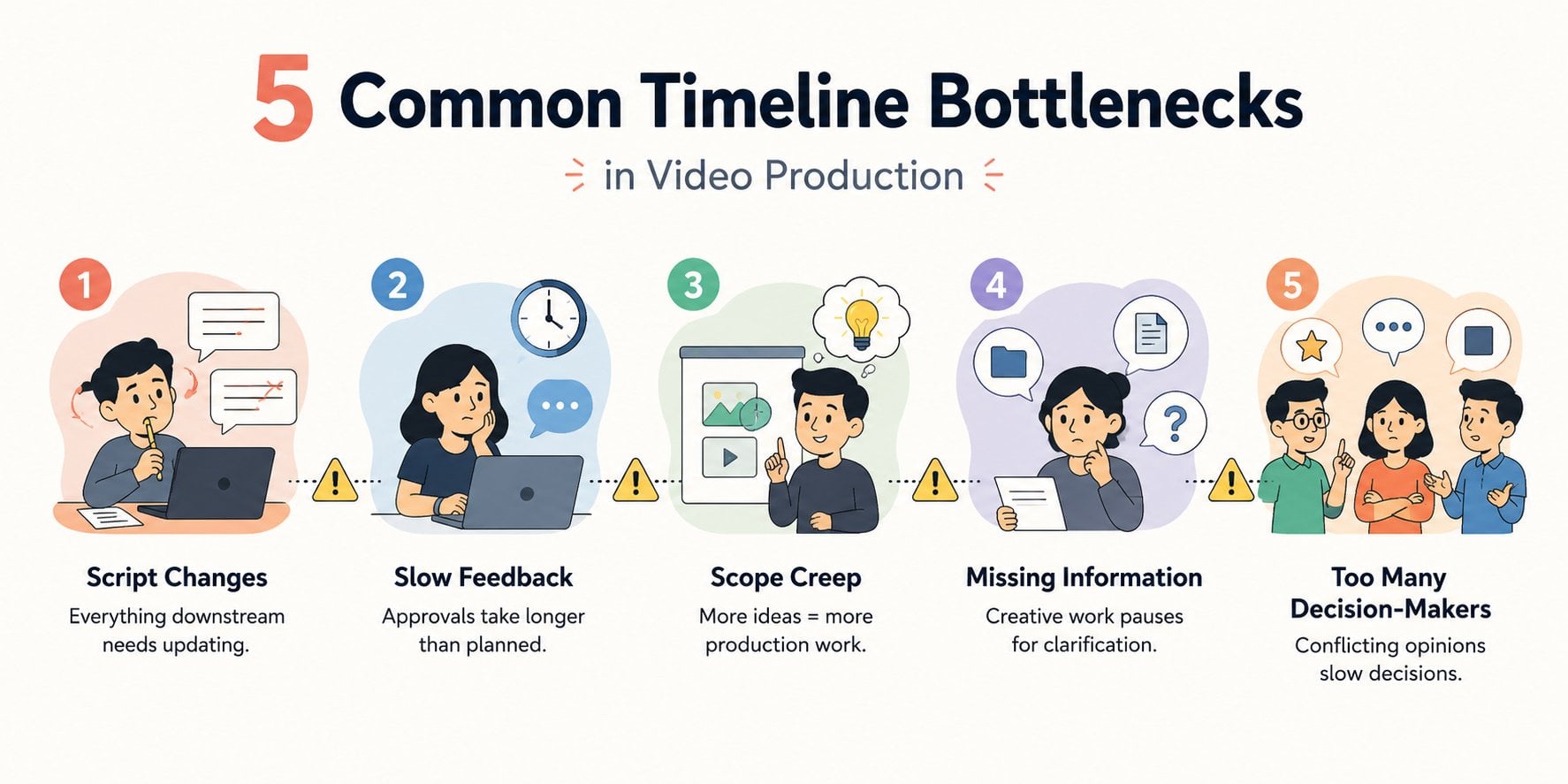 The Script Keeps Changing After Production Starts
A strong script is the foundation of an explainer video. If the message keeps changing after we’ve moved into production, everything else has to follow.
This happens more often than people expect.
Sometimes a client sees the storyboard and realizes the explanation needs a different angle. Other times, a new stakeholder joins the conversation and brings fresh opinions.
Some changes are completely normal. In fact, we expect feedback during production. But major script changes after the voice-over has been recorded or animation has started can affect the entire timeline.
A small sentence change might require a new voice-over recording. A new idea might mean redesigning several scenes. Things that look like quick edits can create a bigger chain reaction behind the scenes.
That’s why we always spend time understanding the message early. A few extra conversations at the beginning can save days later.
This is not unique to video production, though.
Project management research has found that 37% of organizations identify inaccurate requirements as a primary reason projects fail. That reinforces why I believe investing more time in defining the message upfront almost always pays off later.
Feedback Takes Longer Than Expected
This is probably one of the most common reasons a timeline moves.
Creating an explainer video is a collaborative process.
Our team handles the creative work, but clients still play an important role in keeping things moving. When feedback arrives quickly, the project usually flows smoothly.
The challenge comes when approvals involve too many steps. I’ve seen projects where one person reviews the video, then another person gives different feedback a week later.
Suddenly, a decision that could have taken one day turns into a much longer discussion.
Having multiple opinions is not a bad thing.
Good feedback can make the final video much better. The key is making sure everyone involved understands the goal before the review process starts.
The Project Scope Quietly Gets Bigger
Sometimes a project delay doesn’t come from a problem. It comes from enthusiasm.
A client starts with a 90-second explainer video, then adds a few extra scenes. Then maybe a product feature needs more explanation. Then another idea comes up because the team sees more opportunities.
I understand why this happens. When you see your video taking shape, it’s easy to think of more things you want to include.
The issue is that every addition affects the production timeline.
More scenes mean more illustration, animation, reviews, and revisions. Even a small scope increase can change the original schedule.
At Breadnbeyond, we try to identify these changes early and discuss their impact before moving forward. Sometimes adding more is the right decision. Sometimes keeping the original focus creates a stronger video.
Missing Information Slows Down the Creative Process
Before we animate anything, our team needs a clear understanding of the product, audience, and message. Without that information, the creative process becomes much slower.
This is especially common for complex products or industries. A client might know their product inside and out, but explaining it to an outside team takes time.
We often spend time asking questions, reviewing materials, and making sure we understand what makes the product valuable.
That preparation is important because a video can look great but still miss the point if the message is unclear.
The earlier we get the right information, the easier it is for everyone involved.
Too Many People Give Feedback Without Clear Roles
More opinions can feel helpful, but too many decision-makers can make a project harder to manage.
I’ve seen situations where marketing likes one direction, the sales team prefers another, and leadership has a completely different vision.
Everyone has good intentions, but the video starts moving in circles.
A smoother process usually happens when there is one main person who collects feedback and communicates the final decisions.
It keeps conversations focused and helps the production team understand what needs to change.

How Can You Keep an Explainer Video Project on Schedule?
Keeping an explainer video project on schedule can start with setting the right foundation early. The smoothest projects usually happen when everyone understands the goal, timeline, and responsibilities from the beginning.
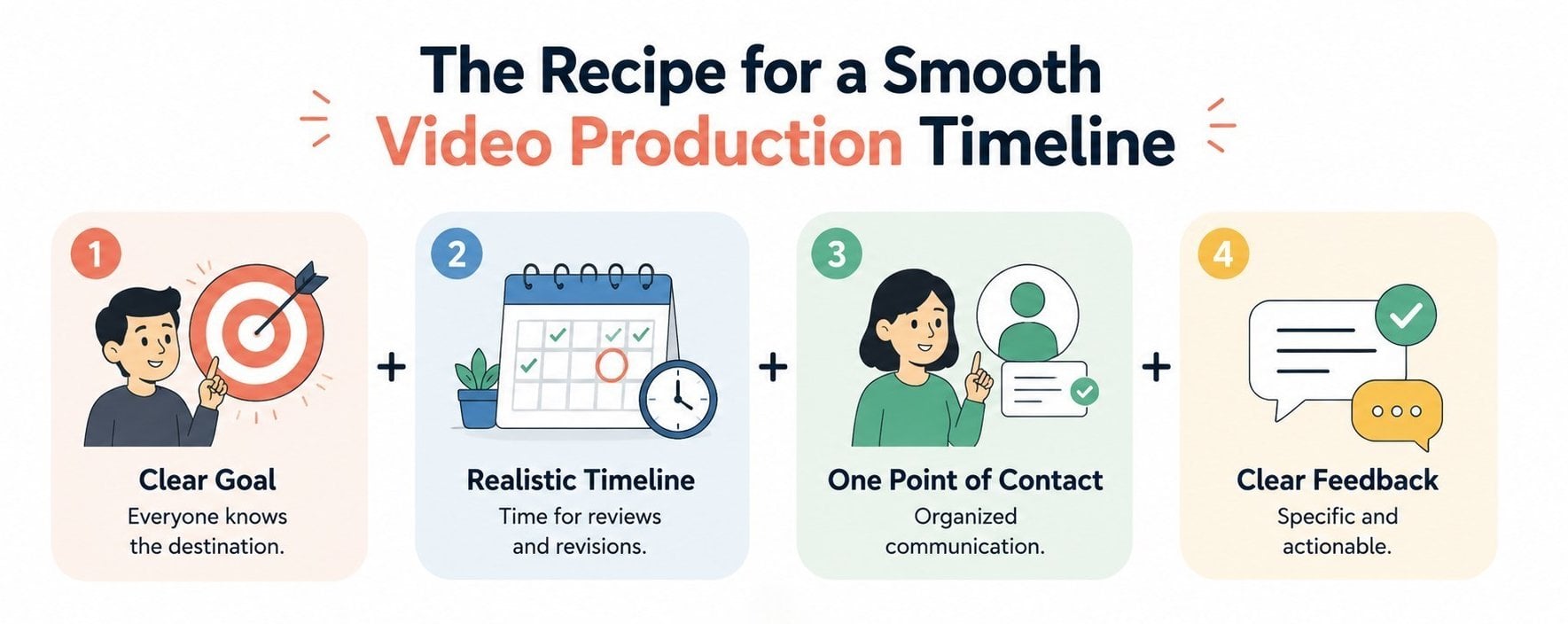
A good production process is a team effort. The client knows their business best, while the production team knows how to turn that message into a clear visual story. When both sides work together, the timeline becomes much easier to manage.
Start With a Clear Goal Before Production Begins
Before we create anything, we always want to understand what the video needs to achieve.
Is it meant to explain a complicated product? Introduce a new service? Help sales teams close more deals? These goals affect the script, visual style, and overall direction.
I’ve seen projects move much faster when everyone is aligned on the purpose from day one. It gives our team a clear target instead of trying to solve problems halfway through production.
The more clarity we have at the beginning, the fewer major changes we need later.
Set a Realistic Timeline With Enough Room for Feedback
A common mistake is creating a production schedule that only considers the creative work. In reality, feedback and approval also need time.
An explainer video goes through several stages. There’s scripting, storyboarding, voice-over, illustration, animation, and revisions. Each stage depends on decisions being made before the next one can move forward.
When we plan a timeline with realistic review periods, the process feels much less stressful for everyone involved. A little extra room helps.
Assign One Main Point of Contact
Communication becomes much easier when there is one person who helps collect feedback and make decisions.
This doesn’t mean other team members cannot share their thoughts. Different perspectives are valuable.
But having one main contact keeps the feedback organized and prevents the project from moving in different directions.
I’ve found that the best collaborations are the ones where communication feels simple. Everyone knows who to talk to, what needs to be decided, and when to move forward.
Trust the Process and Share Feedback Clearly
Feedback is a normal part of creating an explainer video. We expect it.
The important part is making sure feedback is specific and connected to the original goal. Comments like “make it better” are difficult for any creative team to act on.
More useful feedback explains what feels unclear, what needs more emphasis, or what doesn’t match the audience’s needs.
After producing hundreds of explainer videos, I’ve learned that good feedback doesn’t need to be complicated. It just needs to help the team understand the reason behind a change.
At the end of the day, keeping a project on schedule is about working together.
The client and production team are aiming for the same thing: a video that communicates the message clearly and delivers the expected result.
How Does Breadnbeyond Handle Unexpected Delays?
Even with careful planning, unexpected things can happen during production. The important part is how we respond.
At Breadnbeyond, we don’t see delays as something to hide. We see them as something to manage properly. The goal is always to find the best solution while keeping everyone on the same page.
When a delay happens, the first thing we do is understand the reason behind it.
Is there a creative challenge? Does the script need more work? Are there changes that could affect the final quality? Knowing the cause helps us decide the right next step.
Communication matters a lot here.
We prefer to update clients early instead of waiting until the deadline becomes a bigger problem. A quick conversation can often solve things faster than a long chain of messages.
Our usual delivery timeline is around 5 to 7 weeks, depending on the explainer video package you choose and the complexity of the project.
Some videos can move faster, while others need more time for additional scenes, revisions, or a more detailed production process.
I believe that flexibility is part of creating something good.
Sometimes a little extra time allows us to catch details we might have missed, improve a scene, or make the overall message clearer.
Of course, we still take timelines seriously. Our team plans carefully because we know our clients have their own schedules, launches, and business goals to consider.
Wrapping Up: The Best Timelines Start With the Right Partner
A smooth production experience comes from having a team that understands the goal, communicates clearly, and takes ownership of the process.
Breadnbeyond knows that our clients are trusting us with more than just a video.
There are often product launches, campaigns, or business goals behind every project. That’s why we treat every timeline as something to respect, not just a date on a calendar.
Every project has its own story. Some need more exploration, while others move faster because the direction is already clear.
Our job is to guide the process, keep things organized, and make sure the final video is something everyone feels good about.
A great partnership makes a big difference.
When you work with a team that cares about both the creative outcome and the process behind it, creating an explainer video becomes much more predictable and enjoyable.
Mini FAQs for Explainer Video Production Delays
Can a small explainer video project still take several weeks?
Yes, because project size is not the only factor that affects production. Even a short professional video may need time for research, creative direction, approvals, and quality checks before it is ready to publish.
Do explainer video studios work on multiple projects at the same time?
Most professional studios handle several projects at once. This is why production schedules are usually planned carefully, with different teams or stages moving in parallel to keep each project organized.
Is a faster production timeline always better?
Not necessarily. A shorter timeline can work for projects with a clear direction and quick decision-making, but rushing important steps can affect the final quality of the video.
What should I prepare before hiring an explainer video studio?
Having a clear idea of your target audience, main message, and business goal can make the process much smoother. You don’t need to have every detail figured out, but a strong starting point helps the studio understand what you need.
How do professional video studios handle projects with tight deadlines?
Many studios can adjust their workflow for urgent projects, but it usually requires early communication, fast approvals, and clear priorities from everyone involved. The earlier a studio knows about your deadline, the easier it is to create a realistic plan.